Roll of Thunder, Hear My Cry Reading Level & Age Guide
19 Sep 2026
16
💡 Quick Answer
When I introduce historical fiction to middle school students, Mildred D. Taylor’s Newbery Medal-winning novel, Roll of Thunder, Hear My Cry, consistently stands out as one of the most powerful and transformative texts in the curriculum. Narrative through Nine-year-old Cassie Logan, the novel follows an African-American family fighting to maintain their independence and land ownership in rural Mississippi during 1933.
In my experience as a middle school reading specialist, parents often ask whether the novel’s 920L Lexile rating accurately matches their child’s reading readiness. Because the story tackles complex social realities alongside 1930s southern dialect, understanding both the quantitative numbers and qualitative themes ensures young readers engage with Cassie’s story productively and thoughtfully.

- Roll of Thunder, Hear My Cry Reading Level & Literacy Benchmarks
- Quantitative Metrics Breakdown: Lexile, AR, and Guided Reading
- Qualitative Analysis: What Makes Roll of Thunder, Hear My Cry Challenging?
- Content and Maturity Considerations for Parents
- Grade-by-Grade Reading Roadmap
- Actionable Strategies to Support Young Readers
- Frequently Asked Questions About Roll of Thunder, Hear My Cry Reading Level
- Final Thoughts for Parents and Educators
Roll of Thunder, Hear My Cry Reading Level & Literacy Benchmarks

To establish a comprehensive reading profile for Roll of Thunder, Hear My Cry, we compare data across all major literacy measurement systems used in American public and private school districts.
| Assessment Metric | Official Score / Level | Target Grade Range | Target Age Group |
|---|---|---|---|
| Lexile Framework | 920L | 5th Grade – 8th Grade | 10 – 14 Years Old |
| Accelerated Reader (AR) | 5.7 | 5th Grade, 7th Month | 10 – 13 Years Old |
| Guided Reading (Fountas & Pinnell) | Level W | 6th Grade | 11 – 12 Years Old |
| Developmental Reading Assessment (DRA) | 60 | 6th Grade | 11 – 12 Years Old |
| Interest Level | Middle Grade (MG) | 5th Grade – 9th Grade | 10 – 15 Years Old |
As reflected in the benchmark table above, Roll of Thunder, Hear My Cry sits firmly in the middle school reading domain. While the quantitative Lexile score of 920L aligns with upper 5th-grade and 6th-grade decoding skills, the AR point value of 10.0 points represents a full 276-page novel that demands sustained reading focus.
For parents who wish to understand how Lexile metrics translate across grade levels, our dedicated guide on the Lexile framework complete guide outlines how quantitative difficulty correlates with school benchmarks.
Quantitative Metrics Breakdown: Lexile, AR, and Guided Reading
Understanding how assessment platforms calculate their ratings helps clarify why Roll of Thunder, Hear My Cry earns its middle-grade placement:
Lexile Score Breakdown (920L)
A 920L Lexile measure indicates that the sentence length and vocabulary frequency match typical expectations for 5th through 8th-grade readers. Mildred D. Taylor writes with rich descriptive prose, alternating between poetic depictions of the Mississippi countryside and authentic period dialogue. For context, this rating places the novel alongside historical fiction classics like Number the Stars reading level and Holes reading level.
Accelerated Reader (AR) Breakdown (5.7)
The AR level of 5.7 means that the text complexity is equivalent to a student reading at the seventh month of fifth grade. The book carries 10.0 AR points, requiring readers to retain character relationships, historical events, and subtle subplot details across 12 full chapters.
Guided Reading Level W
Assigned a Level W under the Fountas & Pinnell Guided Reading system, the book features complex historical background, unsimplified character motivations, and implicit thematic lessons. Guided Reading Level W is typically targeted at 6th graders who are developing advanced critical thinking skills. To see how Level W fits into broader systems, check our overview of reading level measurement systems for books.
For a deeper look into Accelerated Reader point systems and how they impact reading goals, read our breakdown of what is Accelerated Reader level.

Qualitative Analysis: What Makes Roll of Thunder, Hear My Cry Challenging?
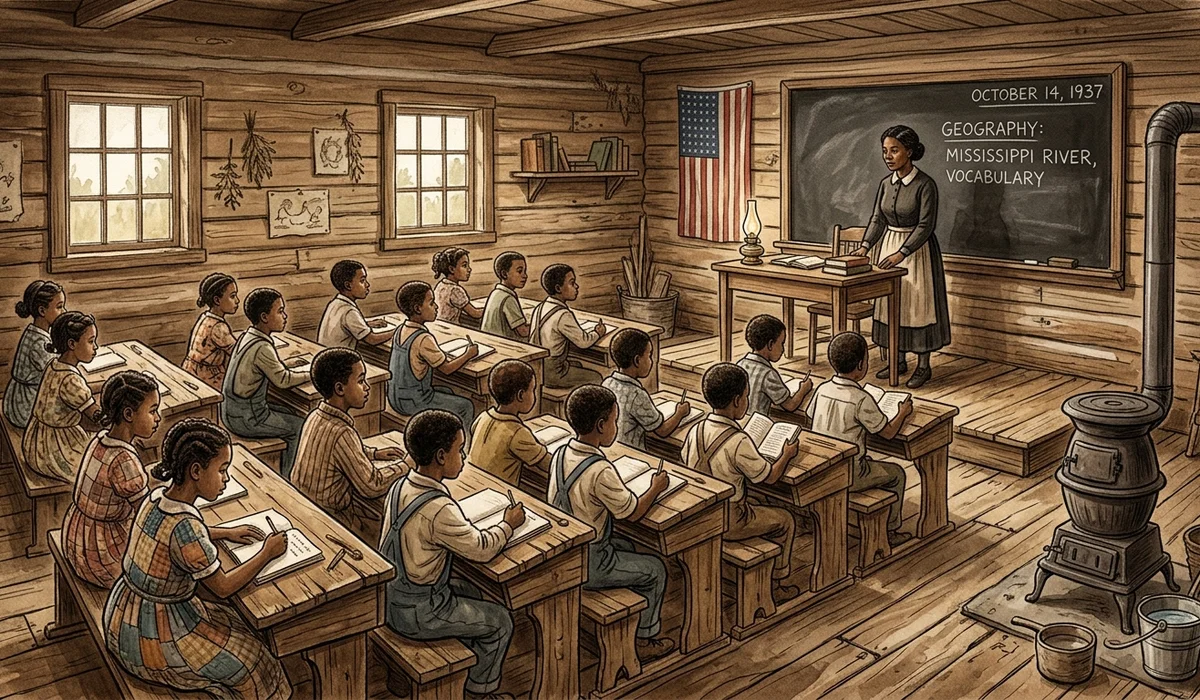
While quantitative formulas measure word lengths and sentence counts, qualitative analysis examines the literary and emotional demands placed on young minds. In my classroom work, I identify three main qualitative aspects that define the reading experience:
1. 1930s Southern Dialect and Vernacular Speech
Mildred D. Taylor captures the authentic voice of 1930s rural Mississippi by writing dialogue in regional southern dialect. Characters frequently use phonetic spellings, contractions, and regional colloquialisms:
- Phonetic Expressions: “y’all”, “ain’t”, “reckon”, “looka here”, “sholy”, “gonna”.
- 1930s Agricultural & Rural Vocabulary: sharecropping, cotton gin, mortgage, mercantile, boycotting, tax lien.
When I read the opening chapters with students, I noticed that some readers stumble initially when decoding phonetic dialogue. However, once students hear the rhythm of the dialect spoken aloud, their reading comprehension increases dramatically.
2. Historical Context of Jim Crow & Great Depression Mississippi
The plot revolves directly around the realities of Jim Crow segregation, sharecropping debt cycles, and systemic racial inequality in the American South. The Logan family’s struggle to retain their 400 acres of land represents economic freedom, contrasting sharply with neighbor families trapped in predatory sharecropping arrangements with white landowners like Harlan Granger.
Understanding the historical weight of segregated school buses, discarded hand-me-down textbooks, and the boycott of the Wallace store requires background knowledge that elevates the text from simple storytelling to historical study.
For readers seeking author background, Wikipedia’s page on Roll of Thunder, Hear My Cry details how Mildred D. Taylor drew directly from her family’s ancestral oral histories in Mississippi to create the Logan family saga.
3. Complex Character Dynamics and Emotional Maturity
Cassie Logan begins the novel with a child’s innocent perspective on fairness and gradually experiences the painful realities of racial prejudice. Her encounter with Lillian Jean Simms in Strawberry, Mississippi, forces Cassie to grapple with injustice while controlling her fiery pride. Processing Cassie’s emotional growth demands empathy and moral reflection from young readers.
Content and Maturity Considerations for Parents
Because Roll of Thunder, Hear My Cry confronts historical racism directly, parents should be aware of specific mature content elements:
- Historical Racial Slurs: The text includes historical racial slurs accurate to 1930s Mississippi dialogue. The language is used to depict the cruelty of prejudice rather than for shock value, providing teachable moments about history.
- Racial Violence and Threat of Night Riders: The storyline portrays night riders (white vigilante groups) who commit arson and violence against Black community members. The Berry family burning incident and the threat of lynching against T.J. Avery create genuine tension.
- Economic Injustice and Sabotage: Themes of economic intimidation, land seizures, and crop destruction are central to the conflict.
- Childhood Conflict and Betrayal: Cassie’s older brother Stacey navigates complex friendships, particularly with T.J. Avery, whose poor choices lead him into serious criminal danger.
The American Library Association awarded Roll of Thunder, Hear My Cry the 1977 Newbery Medal, celebrating its profound contribution to American children’s literature and its unvarnished portrait of resilience and integrity.

Grade-by-Grade Reading Roadmap
To assist parents and teachers in matching Roll of Thunder, Hear My Cry with student readiness, I have outlined this grade-level guide:
4th Grade (Ages 9–10): Guided Read-Aloud & Parent Discussion
For 4th graders, independent reading of the 920L text and historical dialect can prove overwhelming. However, reading the book aloud together as a family or classroom creates rich opportunities to discuss American history, empathy, and courage. Parents of 4th graders looking for appropriate independent selections can explore our guide on 4th grade reading levels.
5th Grade (Ages 10–11): Target Range for Guided Reading
In 5th grade, students with strong decoding skills can read the novel independently with teacher or parent guidance. Keeping a historical vocabulary list and discussing the Strawberry trip chapter together helps maintain strong comprehension.
6th Grade to 8th Grade (Ages 11–14): Ideal Sweet Spot for Independent Study
Middle school students in 6th through 8th grade possess the historical understanding and emotional maturity needed to absorb the full impact of Taylor’s masterpiece. They readily analyze themes of family unity, land preservation, and systemic injustice while working through the 920L Lexile prose independently.
Actionable Strategies to Support Young Readers
If your reader is preparing to tackle Roll of Thunder, Hear My Cry, consider these practical reading strategies:
1. Provide Historical Context Before Reading: Spend 15 minutes discussing 1930s Great Depression conditions, sharecropping, and Jim Crow laws before starting Chapter 1.
2. Read the First Chapter Aloud: Reading Chapter 1 together helps readers adjust to the southern dialect and get to know Cassie, Stacey, Little Man, and Christopher-John.
3. Map out the Logan Land and Family Tree: Creating a visual diagram of the Logan 400 acres, the Great Faith Elementary School, and surrounding plantations helps track setting and plot events.
4. Encourage Character Reflection: Ask your reader to compare Cassie’s initial reaction to unfairness with her mother’s calm, strategic wisdom.
Frequently Asked Questions About Roll of Thunder, Hear My Cry Reading Level
What is the exact Lexile score for Roll of Thunder, Hear My Cry?
The official Lexile measure for Roll of Thunder, Hear My Cry is 920L, placing it in the 5th to 8th-grade reading difficulty band.
What is the AR (Accelerated Reader) level and point value?
The book has an AR reading level of 5.7 and is worth 10.0 AR points.
What grade is Roll of Thunder, Hear My Cry recommended for?
It is officially recommended for grades 5 through 8 (ages 10 to 14). It is most commonly taught as a core text in 6th and 7th grade English language arts classes.
Is Roll of Thunder, Hear My Cry appropriate for a 5th grader?
Yes, for mature 5th graders. While the vocabulary is manageable, parents should be prepared to discuss historical racial themes and mild period violence together.
Are there other books in the Logan Family series?
Yes! Mildred D. Taylor wrote several books in the Logan family saga, including Song of the Trees (prequel novella), Let the Circle Be Unbroken, The Road to Memphis, and All the Days Past, All the Days to Come.
Final Thoughts for Parents and Educators
In my teaching career, Roll of Thunder, Hear My Cry remains an irreplaceable staple of American literature. While its 920L Lexile rating and 5.7 AR score require dedicated effort from middle-grade readers, Cassie Logan’s courage and her family’s unwavering dignity deliver timeless lessons in justice, love, and resilience. By supporting young readers with historical context and open conversation, parents and educators can make reading this classic an unforgettable educational milestone.
Please Write Your Comments