Kumon Reading Levels Explained — Complete Guide for Parents (2026)
12 Jun 2026
589
Your child just moved up to Kumon Level D — but what does that actually mean? Is that 4th grade? 5th? And why does your neighbor’s kid at the same grade have a completely different letter? Kumon’s alphabet-based system is one of the most misunderstood reading frameworks parents encounter, and the confusion is totally understandable. This guide breaks it all down.
How Kumon Reading Levels Work

Quick Answer: Kumon reading levels run from 7A (pre-K, age 3–4) through Level J (grade 10+, age 15+), using a letter-and-number system that reflects mastery rather than school grade. Most children start 1–2 levels below their current school grade. Kumon does not publish official Lexile equivalents, but approximate grade-based mappings exist. Each level must be fully mastered before advancement.
The Kumon Reading Program (official) uses a system that moves from 7A at the very beginning all the way through Level J at an advanced high school–equivalent level. That’s 22 levels in total — and each one represents a genuine mastery milestone, not a calendar date or birthday.
Here’s the core philosophy: Kumon advances students only when they have fully mastered a level. This is fundamentally different from how school reading works, where a child moves to the next grade regardless of whether they’ve completely mastered the reading skills of the current one. At Kumon, a child who zooms through Level C in four months advances immediately. A child who needs eight months at Level B stays until they’re truly ready. There are no shortcuts, and that’s by design.
The level names also trip parents up. Levels 7A through 2A are the earliest stages (the numbers count down toward the letters). After 2A comes Level A, then B, C, and so on up through J. Think of 7A as “seven steps before A” — the numbering is a countdown, not a ranking order you’d expect intuitively.
Kumon Level at a Glance
📖 Total levels: 22 (7A through J)
🎯 Advancement: mastery-based, not age-based
🏫 Starting point: typically 1–2 levels below school grade
📊 Official Lexile mapping: none published by Kumon
⏱️ Typical time per level: 6–12 months
📝 Method: daily worksheets, self-paced comprehension practice
Kumon Reading Levels by Grade — Full Chart

Kumon does not publish an official correspondence table mapping their levels to school grades or Lexile scores. The grade equivalents below are widely used approximations based on the reading skills and text complexity at each level — they are not official Kumon designations.
| Kumon Level | School Grade (Approx.) | Typical Age | Skills Covered |
|---|---|---|---|
| 7A | Pre-K | Age 3–4 | Letter recognition, basic vocabulary |
| 6A | Pre-K / Kindergarten | Age 4–5 | Word recognition, simple sentences |
| 5A | Kindergarten | Age 5–6 | Short sentences, sight words |
| 4A | Kindergarten / Grade 1 | Age 5–6 | Simple stories, phonics |
| 3A | Grade 1 | Age 6–7 | Short passages, basic comprehension |
| 2A | Grade 1–2 | Age 6–8 | Longer passages, sequencing |
| A | Grade 1–2 | Age 6–8 | Story comprehension, vocabulary |
| B | Grade 2–3 | Age 7–9 | Reading comprehension, inference |
| C | Grade 3–4 | Age 8–10 | Multi-paragraph texts, main idea |
| D | Grade 4–5 | Age 9–11 | Complex comprehension, literary elements |
| E | Grade 5–6 | Age 10–12 | Longer texts, critical thinking |
| F | Grade 6–7 | Age 11–13 | Advanced comprehension, analysis |
| G | Grade 7–8 | Age 12–14 | Classic literature excerpts |
| H | Grade 8–9 | Age 13–15 | High school level texts |
| I | Grade 9–10 | Age 14–16 | College prep reading |
| J | Grade 10+ | Age 15+ | Advanced academic texts |
One question parents frequently ask is: “What Lexile level is Kumon Level D?” The honest answer is that Kumon does not publish official Lexile equivalents for their levels. The Lexile Framework for Reading is an independent measurement system, and Kumon’s worksheets have not been Lexile-assessed in any publicly documented way. Approximate Lexile ranges based on grade alignment are:
- Kumon A–B ≈ 300–650L (approximate, unofficial)
- Kumon C–D ≈ 650–940L (approximate, unofficial)
- Kumon E–F ≈ 940–1185L (approximate, unofficial)
- Kumon G–H ≈ 1070–1300L (approximate, unofficial)
Treat these as rough orientation guides only. For a detailed look at how grade levels map to Lexile scores, see our K–12 Lexile chart which covers the full range from kindergarten through high school.
How Kumon Reading Compares to School Reading Levels
Kumon exists in a different category from the reading measurement systems schools typically use. Here’s how it sits alongside the frameworks you’ve probably heard of:
| System | Who Uses It | Scale | Measures |
|---|---|---|---|
| Kumon | Kumon centers (supplementary) | 7A through J | Mastery of comprehension skills via worksheets |
| Lexile | Schools, libraries, standardized tests | BR100L – 1600L+ | Text complexity + reader ability (numeric) |
| AR (Accelerated Reader) | Many U.S. elementary schools | 0.1 – 13.0 (grade scale) | Book quizzes, points, reading practice |
| Fountas & Pinnell (F&P) | K–8 classroom guided reading | A through Z | Oral reading fluency + comprehension |
The key distinction: Kumon is a supplementary enrichment program, not a school reading assessment. A child’s Kumon level is not intended to directly match their school grade level — and that’s not a problem. Kumon often places students one or two levels behind their current grade to build an absolutely solid foundation before moving forward. A 3rd grader enrolled at Kumon Level B (Grade 2–3 range) isn’t falling behind — they’re building mastery from the ground up.
This also means you can’t directly swap “Kumon Level D” for “Lexile 800L” on a school form. The systems don’t convert cleanly because they measure different things. For a fuller breakdown of how these systems relate to each other, see our guide on how Kumon compares to Lexile, AR, and other systems. And if you want to know what Lexile score your child’s school typically expects at their grade level, our expected reading level for your child’s grade guide covers that precisely.
Books That Match Each Kumon Level
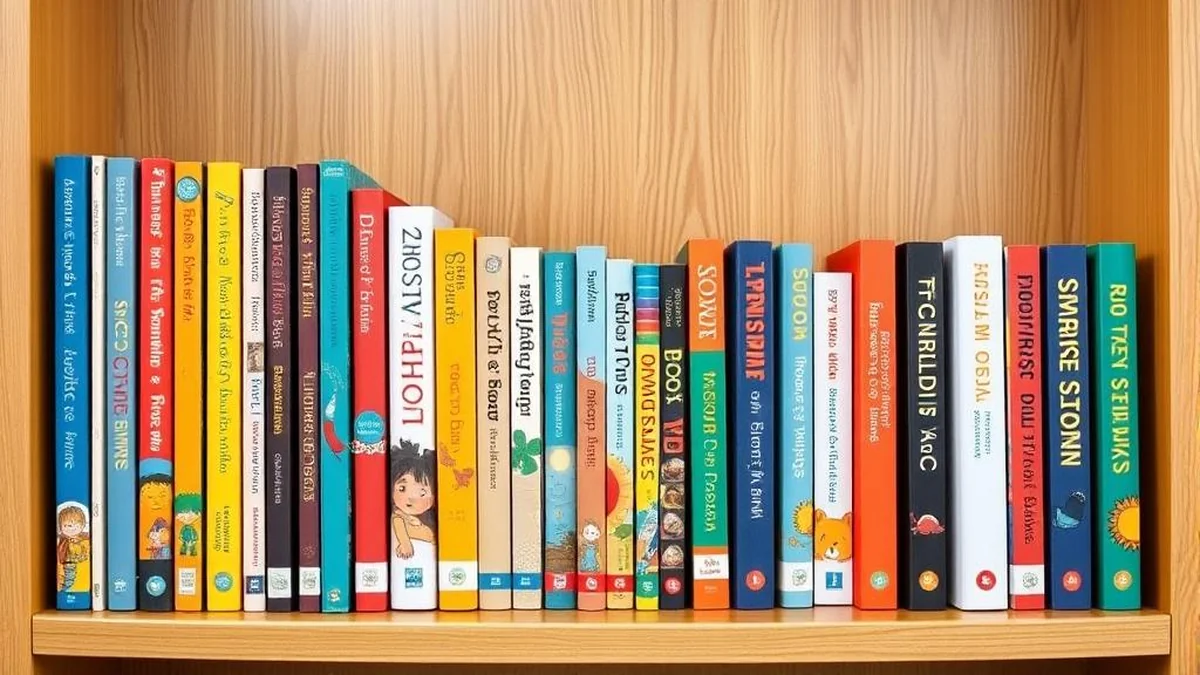
One of the most practical things you can do as a Kumon parent is stock your home with books that complement your child’s current Kumon level. Since Kumon builds comprehension through worksheets, pairing those skills with actual books to read for pleasure reinforces everything without feeling like more homework.
| Kumon Level | Example Books | Approx. Lexile Range | Typical Age |
|---|---|---|---|
| 7A–5A | Hop on Pop, Elephant & Piggie series | BR – 200L | 3–6 |
| 4A–3A | Fly Guy series, Biscuit books | 100–300L | 5–7 |
| 2A–A | Magic Tree House, Frog and Toad, Junie B. Jones (290–570L) | 300–570L | 6–8 |
| B–C | Charlotte’s Web, The One and Only Ivan, Diary of a Wimpy Kid | 560–850L | 7–10 |
| D–E | Hatchet, Wonder, Percy Jackson series | 770–1000L | 9–12 |
| F–G | The Outsiders, The Giver, To Kill a Mockingbird (abridged) | 1000–1200L | 11–14 |
| H–J | 1984, The Great Gatsby, college prep nonfiction | 1150–1400L+ | 13+ |
A few practical notes: the Lexile ranges above are approximate and based on grade-level alignment, not official Kumon data. At the 2A–A level, Junie B. Jones (290–570L) is a particularly good match — the humor keeps reluctant readers engaged while the vocabulary and sentence structure align well with the skills Kumon is building at those levels. For Level B–C students, Diary of a Wimpy Kid sits comfortably in the comprehension range while offering the inference and contextual reading that Kumon Level B–C worksheets emphasize.
How Fast Should My Child Progress Through Kumon Levels?

The most honest answer: it varies widely, and that’s okay. Kumon’s own guidance suggests that a student doing their daily worksheets consistently typically spends somewhere between 6 and 12 months on each level — sometimes less for advanced students, sometimes more for those who need extra reinforcement.
Here’s what actually drives the pace:
Consistency matters more than effort. Kumon is designed as a daily practice program — typically 20–30 minutes per day, five or more days per week. Children who practice consistently almost always advance more steadily than those who do marathon sessions twice a week. The daily habit is the engine, not the intensity.
Starting level affects early pace. Most Kumon instructors deliberately place new students below their school grade level to identify and fill any hidden gaps. A 4th grader starting at Level B might feel frustrating at first, but that foundation work typically accelerates progress once they hit the levels that match their grade.
Advancement happens at the instructor’s discretion. Unlike school grades, Kumon advancement isn’t automatic. Instructors look for consistent high scores (typically 95%+) before moving a student to the next level. If your child is scoring lower, expect more time at the current level — and understand that’s the program working as intended.
Don’t Rush the Levels
Pushing for faster advancement in Kumon reading almost always backfires. If a child advances before fully mastering a level, comprehension gaps emerge at higher levels and become much harder to remediate. Mastery is the entire point of the Kumon method. A slower, solid progression at Level C will always serve your child better than a rushed push to Level E.
When to genuinely be concerned: If your child has been at the same Kumon level for more than 12–14 months with consistent practice and high worksheet scores, it’s worth a conversation with your Kumon instructor. Stagnation at that point can sometimes indicate a mismatch between the program and how your child learns, or an underlying reading issue that worksheets alone can’t address.
The honest verdict on Kumon reading: For children who struggle with reading comprehension or need systematic reinforcement, Kumon’s worksheet-based method can be highly effective — especially when combined with independent reading for pleasure. It is genuinely rigorous. Where it falls short is engagement: worksheets are not books, and children still need exposure to real, joyful reading alongside the program.
How to Track Your Child’s Kumon Progress
Ask your Kumon instructor for the most recent worksheet score summaries at each session. Consistent scores of 95%+ across multiple worksheet sets at the same level typically signal that advancement is coming. If scores plateau below that, ask specifically which skills are still being reinforced — it’s always a specific comprehension skill, not a general “not ready” verdict.
Frequently Asked Questions About Kumon Reading Levels
What Kumon level should my 2nd grader be at?
There is no single correct answer. Many 2nd graders in Kumon work at Level A or B, which corresponds roughly to grades 1–3. Some will be at 2A or even 3A if they’re newer to the program. Because Kumon places students based on mastery, not age, a 2nd grader at Level 2A is not behind — they’re exactly where their demonstrated skills place them.
Is Kumon Level D considered grade level for a 4th grader?
Approximately, yes. Level D maps to roughly grades 4–5 in terms of reading skills. A 4th grader working at Level D is at or slightly above what their school would typically expect. However, remember that this is an informal approximation — Kumon does not officially align their levels to school grades.
Does Kumon publish Lexile levels for their program?
No. As of 2026, Kumon has not published official Lexile equivalents for any of their reading levels. Any Lexile ranges you see associated with Kumon levels — including the approximate mappings in this guide — are based on the school grade equivalents and the Lexile ranges typical for those grades, not on formal assessment by Kumon or the Lexile Framework.
My child is in 5th grade but working at Kumon Level C. Should I be worried?
Not necessarily. Kumon routinely starts students below their school grade to build a complete foundation. A 5th grader at Level C (grades 3–4 range) who is progressing consistently is doing exactly what the program intends. The question to ask your instructor is: what is the target advancement timeline, and are the current scores supporting that trajectory?
Can I use Kumon reading levels to find books for my child?
Yes, with caveats. Use the level-to-grade approximation to find books in the right complexity range, then let your child’s interest guide the actual selection. A child at Kumon Level B benefits most from books in the 400–700L range, but a book they’re excited to read at 750L will do more for their reading growth than a perfectly matched but boring book at 500L. Engagement and Kumon are both part of the equation.
What to do next: Check your child’s most recent Kumon worksheet scores with their instructor and ask specifically which level they’re working toward and what the advancement criteria look like. Then visit your library or school with that grade-equivalent range in hand and find two or three books your child actually wants to read — ideally something slightly above their current Kumon level to stretch their vocabulary. The combination of Kumon’s structured comprehension practice and genuine pleasure reading is where the real progress happens.
Please Write Your Comments