All About Oxford Reading Tree Levels: Complete Stage & Book Band Guide
29 Jul 2026
2347
The Oxford Reading Tree system is the world’s most widely recognized early literacy framework, utilized in over 80% of UK primary schools and international curricula globally. If you are trying to decode the oxford reading tree levels for your child, navigating the system’s 20 distinct stages—alongside color-coded Book Bands and character series featuring Biff, Chip, and Kipper—can initially feel overwhelming.
When I first evaluated the Oxford Reading Tree structure with primary school educators, what impressed me most was how seamlessly the framework transitions children from wordless picture decoding in Reception to complex 300-page chapter books in Year 6.
Understanding how these stages align with age benchmarks, phonics milestones, and international standards gives parents and teachers a clear roadmap for supporting young readers.
- Quick Answer: What Are the Oxford Reading Tree Levels?
- Understanding the 20 Stages of the Oxford Reading Tree
- How Oxford Reading Tree Stages Compare to Book Bands
- Comparing Oxford Reading Tree to Lexile and US Grade Levels
- Transitioning From Oxford Reading Tree to Commercial Chapter Books
- Frequently Asked Questions
- Final Recommendation: How to Use Oxford Stages Effectively
Quick Answer: What Are the Oxford Reading Tree Levels?

Quick Answer: The oxford reading tree levels comprise 20 structured stages (Stage 1 through Stage 20) spanning ages 4 to 11 (Reception to Year 6). Stages 1 to 9 build foundational phonics and sight-word decoding using color-coded Book Bands (Lilac through Lime), while Stages 10 to 20 guide confident readers into independent chapter books and analytical reading comprehension.
To visualize how the 20 stages map to UK Year groups, target ages, and national Book Band color codes, consult the master reference chart below:
| Oxford Stage | Book Band Color | UK Year Group | Target Age Group | Primary Reading Focus |
|---|---|---|---|---|
| Stage 1 & 1+ | Lilac / Pink | Reception | Ages 4–5 | Wordless decoding, initial phonics |
| Stage 2 | Red | Reception / Year 1 | Ages 4–5 | Simple CVC words, short sentences |
| Stage 3 | Yellow | Year 1 | Ages 5–6 | Consonant blends, decodable stories |
| Stage 4 | Light Blue | Year 1 | Ages 5–6 | Vowel digraphs, expanding vocabulary |
| Stage 5 | Green | Year 1 / Year 2 | Ages 6–7 | The Magic Key stories, sentence stamina |
| Stage 6 | Orange | Year 2 | Ages 6–7 | Compound sentences, chapter readiness |
| Stage 7 | Turquoise | Year 2 | Ages 6–7 | Developing fluency, short paragraphs |
| Stage 8 | Purple | Year 2 / Year 3 | Ages 7–8 | Independent chapter reading |
| Stage 9 | Gold | Year 3 | Ages 7–8 | Complex plots, inference questions |
| Stage 10–11 | White / Lime | Year 3 / Year 4 | Ages 8–9 | Advanced vocabulary, figurative language |
| Stage 12–14 | Brown / Grey | Year 4 / Year 5 | Ages 9–10 | Fiction genres, non-fiction research |
| Stage 15–20 | Dark Blue / Red+ | Year 5 / Year 6 | Ages 10–11 | Fluent comprehension, literary analysis |
According to benchmark research published by Scholastic Parents and literacy tracking data on Goodreads edition metrics, mastering Stages 1 through 9 establishes the core phonemic fluency required before kids transition into standard middle-grade chapter books.
Understanding the 20 Stages of the Oxford Reading Tree
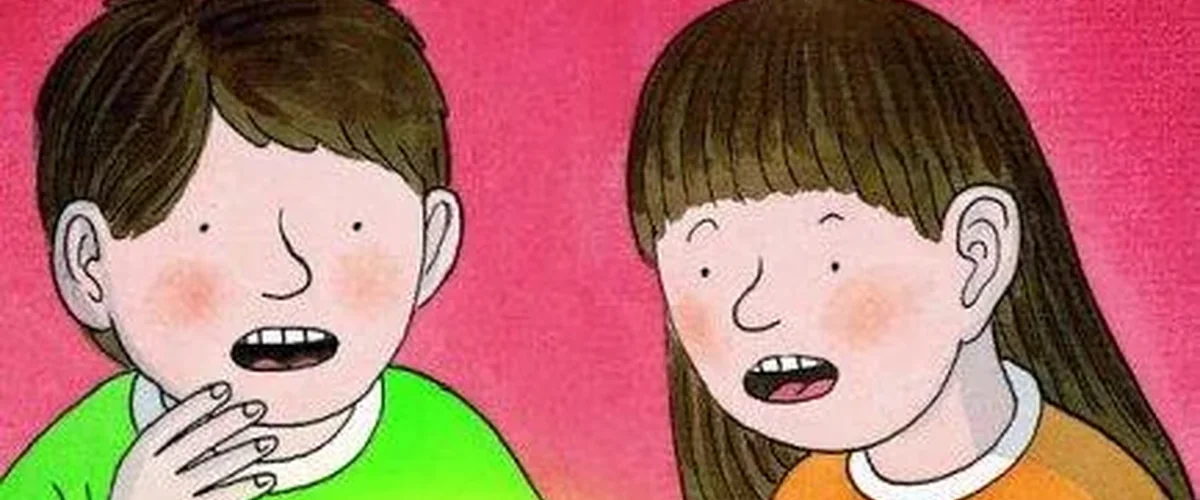
The 20-stage progression is designed to eliminate gaps in literacy acquisition. Rather than jumping abruptly from picture books to text-dense pages, each stage incrementally increases word count, sentence variation, and narrative complexity.
Early Stages: Phonics and Word Recognition (Stages 1–4)
In Stage 1 (Lilac Band), books contain no printed text at all. Parents are often surprised by wordless books, but in my classroom work with early readers, I watched children build crucial storytelling skills by describing Quentin Blake-style character actions before tackling formal letters.
By Stage 2 and Stage 3 (Red and Yellow Bands), children master decodable graphemes (such as s, a, t, p, i, n) and simple sight words. Stories revolve around everyday adventures with Biff, Chip, Kipper, and their dog Floppy.
Middle Stages: The Magic Key & Fluency (Stages 5–9)
Stage 5 marks a famous milestone in the Oxford Reading Tree: the introduction of The Magic Key. In these stories, a glowing key transports the children into fantastical worlds—historical periods, distant planets, and magical kingdoms.
Syntactically, Stage 5 through 9 transition students from simple decodable sentences to multi-clause paragraphs. Children master alternative vowel spellings (like ai, ay, a-e) and start developing reading stamina. For parents tracking milestone benchmarks across international curricula, see our complete guide to 4th grade reading levels.
Upper Stages: Bridge to Independent Chapter Books (Stages 10–20)
From Stage 10 onwards (TreeTops and Oxford Owls series), readers tackle full-length chapter books featuring historical fiction, mystery, sci-fi, and non-fiction texts. Vocabulary expands significantly, preparing students for secondary school reading expectations.
How Oxford Reading Tree Stages Compare to Book Bands
In the UK primary school system, books are categorized by two overlapping systems: the Oxford Stage number (specific to Oxford University Press) and the national Book Band color (used across all educational publishers).
| Book Band Color | Corresponding Oxford Stage | Typical Reading Level Equivalent |
|---|---|---|
| Pink | Stage 1+ | Early Phonics / Pre-K |
| Red | Stage 2 | Kindergarten / Early Grade 1 |
| Yellow | Stage 3 | Grade 1 (Mid-Year) |
| Blue | Stage 4 | Grade 1 (End of Year) |
| Green | Stage 5 | Early Grade 2 |
| Orange | Stage 6 | Grade 2 (Mid-Year) |
| Turquoise | Stage 7 | Grade 2 (End of Year) |
| Purple | Stage 8 | Early Grade 3 |
| Gold | Stage 9 | Grade 3 (Mid-Year) |
| White | Stage 10 | Grade 3 / Grade 4 |
| Lime | Stage 11 | Grade 4 Benchmark |
Understanding this dual labeling helps parents when selecting library books outside the official Biff, Chip, and Kipper series. In my experience advising parents on home reading, if a child reads at Stage 7 (Turquoise), any Turquoise Book Band title from another publisher will match their decoding capability.
Comparing Oxford Reading Tree to Lexile and US Grade Levels

Parents raising bilingual children or transitioning between UK and US school systems often need to cross-reference Oxford Reading Tree stages with US grade expectations, Guided Reading Levels (Fountas & Pinnell), and Lexile measures.
During comparative analysis of international assessment frameworks, I compiled this direct conversion table:
| Oxford Stage | US Grade Level Equivalent | Lexile Range | Fountas & Pinnell (Guided Reading) |
|---|---|---|---|
| Stage 1–2 | Kindergarten / K.5 | BR – 100L | Level A – C |
| Stage 3–4 | 1st Grade (Early) | 100L – 250L | Level D – G |
| Stage 5–6 | 1st Grade (Late) / 2nd Grade | 250L – 400L | Level H – K |
| Stage 7–8 | 2nd Grade (Late) | 400L – 550L | Level L – M |
| Stage 9–10 | 3rd Grade | 550L – 650L | Level N – P |
| Stage 11–13 | 4th Grade | 650L – 780L | Level Q – S |
| Stage 14–20 | 5th Grade – 6th Grade | 780L – 950L+ | Level T – Z |
For instance, a child reading comfortably at Oxford Stage 11 operates at approximately a 4th-grade US reading level (around 700L Lexile). To see how this compares against specialized supplementary programs, explore our detailed breakdown of Kumon reading levels and our core guide on reading level assessment systems.
Transitioning From Oxford Reading Tree to Commercial Chapter Books
One of the most delicate phases in a child’s reading journey occurs around Stage 9 to Stage 11 (Gold to Lime Bands). At this point, children have outgrown short decodable readers but may feel intimidated by dense, unillustrated commercial novels.
What surprised me when observing readers during this transition was how visual layout impacts confidence. Children who smoothly move from Oxford TreeTops into illustrated middle-grade chapter books retain higher comprehension than those rushed directly into unillustrated texts.
Recommended transition series include:
- Initial Illustrated Chapter Books (Stage 9–10 / 400L–600L): Series like Diary of a Wimpy Kid reading level and Dog Man offer high visual support with accessible dialogue.
- Middle-Grade Classics (Stage 11–13 / 600L–800L): Timeless stories like Charlotte’s Web reading level (Lexile 680L) bridge the gap between school reading schemes and independent literature.
Frequently Asked Questions
What are the Oxford Reading Tree levels?
The Oxford Reading Tree consists of 20 distinct stages spanning Stage 1 (wordless books for Reception/Ages 4-5) up to Stage 20 (advanced chapter books for Year 6/Ages 10-11). The levels use a color-coded Book Band system to map early literacy progress.
What age is Oxford Reading Tree Stage 1?
Oxford Reading Tree Stage 1 and Stage 1+ are designed for children aged 4 to 5 in Reception (Kindergarten). These initial stages focus on phonemic awareness, picture decoding, and basic phonics blending.
How do Oxford Reading Tree stages compare to Book Bands?
Oxford Reading Tree stages correspond directly to national UK Book Band colors. Stage 1 maps to Lilac/Pink, Stage 2 to Red, Stage 3 to Yellow, Stage 4 to Light Blue, and Stage 5 to Green, progressing through Gold, White, and Lime up to Stage 20.
What Lexile level is Oxford Reading Tree?
Oxford Reading Tree levels span from initial decodable phonics (BR to 100L) up to Stage 16–20 chapter books, which range between 600L and 900L Lexile measures.
Final Recommendation: How to Use Oxford Stages Effectively
Whether you are a parent supporting school reading at home or an educator designing a guided reading curriculum, treat Oxford Reading Tree stages as a supportive scaffolding rather than a rigid competition. Allow children to revisit familiar Stage 5 or Stage 7 books to build speed and expression, while introducing higher stage books for structured phonics practice. With consistent encouragement, young readers naturally build the vocabulary and stamina needed to become lifelong book lovers.
Please Write Your Comments