Normandy Invasion Beaches Travel Guide Review: A Practical D-Day Companion
24 Sep 2026
2
💡 Quick Answer
When travelers embark on a pilgrimage to northern France to witness the historic landing grounds of Operation Overlord, they are frequently struck by a daunting reality: the Normandy invasion area spans more than 50 miles of coastline, incorporating dozens of disparate museums, bunkers, memorials, and historic villages. Without seasoned guidance, Omaha Beach can easily resemble just another windswept shoreline, and the strategic weight of Pointe du Hoc or Pegasus Bridge can blur into tourist exhaustion.
In The Traveling Professor’s Guide to the Normandy Invasion Beaches, veteran educator and tour director Steve Solosky bridges the critical gap between dense academic military history and practical, on-the-ground travel logistics. Available through The Traveling Professor’s Normandy Travel Guide portal, this concise yet comprehensive book serves as an indispensable field companion.
In my experience reviewing travel literature and historical non-fiction, guidebooks frequently falter by either becoming excessively dry operational manuals or remaining too superficial. When I evaluated Solosky’s work, I found a masterclass in traveler-centric curation that respects both the visitor’s schedule and the sacred solemnity of the battlefields.
- Normandy Invasion Beaches Travel Guide: Book Overview & Core Value
- Comprehensive Coverage: All Five Invasion Beaches and Key Battlegrounds
- Standout Feature: The Normandy American Cemetery Map and Human Stories
- Practical Logistics: Itineraries, Transportation, Dining, and Lodging
- Foreword by Rear Admiral John E. Jolliffe, U.S. Navy (Ret.)
- Who Should Read This Guide?
- Frequently Asked Questions (FAQ)
- Final Verdict: An Essential Companion for an Unforgettable Journey
Normandy Invasion Beaches Travel Guide: Book Overview & Core Value
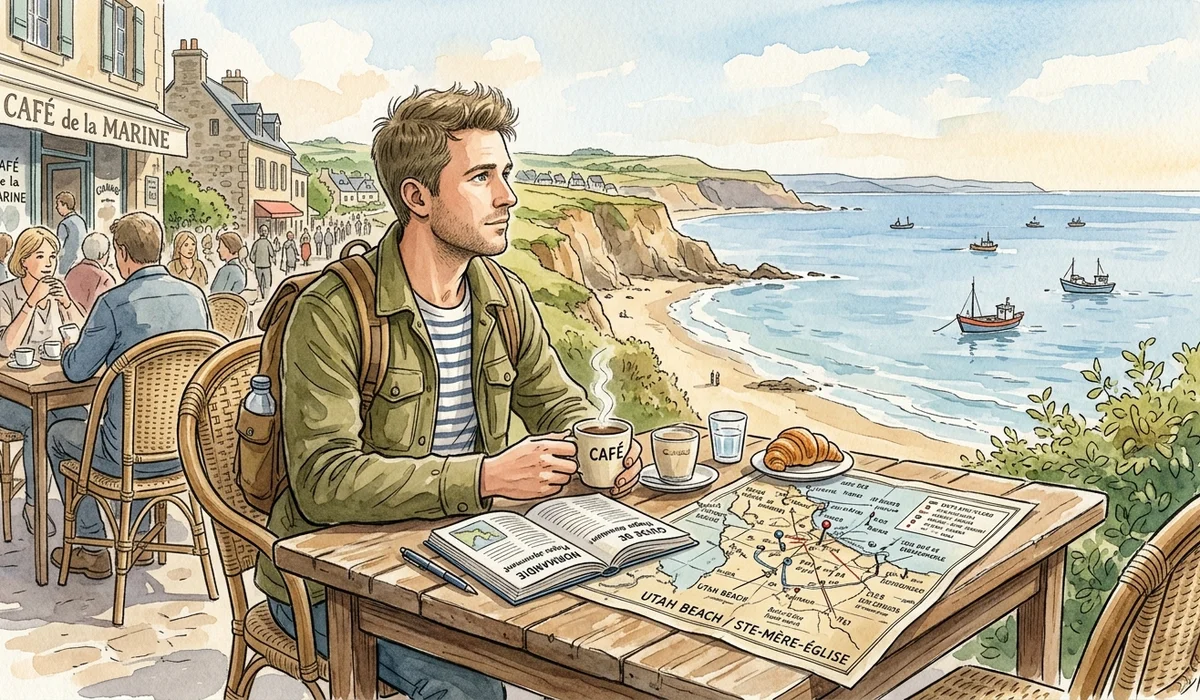
The central philosophy driving Solosky’s guide is articulated cleanly in its opening pages: “The most important exhibit in Normandy is the ground itself.” Rather than overwhelming the reader with exhaustive troop rosters or minute-by-minute battalion logistics, Solosky focuses on helping visitors understand what they are looking at, why it mattered on June 6, 1944, and how to navigate the region efficiently.
| Guide Feature | Content Details | Practical Benefit for Travelers |
|---|---|---|
| Author Expertise | Steve Solosky (25+ years leading Normandy tours) | Tested, real-world advice free of tourist traps |
| Foreword | Rear Admiral John E. Jolliffe, U.S. Navy (Ret.) | Authoritative naval and operational perspective |
| Geographic Scope | All 5 beaches: Utah, Omaha, Gold, Juno, Sword | Complete Allied perspective (US, UK, Canada) |
| Key In-Land Sites | Pointe du Hoc, Sainte-Mère-Église, Pegasus Bridge | Clear routing between drop zones and coastline |
| Itinerary Flexibility | 1-day, 2-day, 3-day, and 4-day customized routes | Eliminates backtracking across 50+ miles |
| Special Highlights | Custom burial map of Normandy American Cemetery | Direct navigation to notable and decorated graves |
For readers who appreciate structured non-fiction analysis, exploring our curated catalog of the 30 must-read non-fiction books highlights how effective storytelling elevates historical understanding.
Comprehensive Coverage: All Five Invasion Beaches and Key Battlegrounds
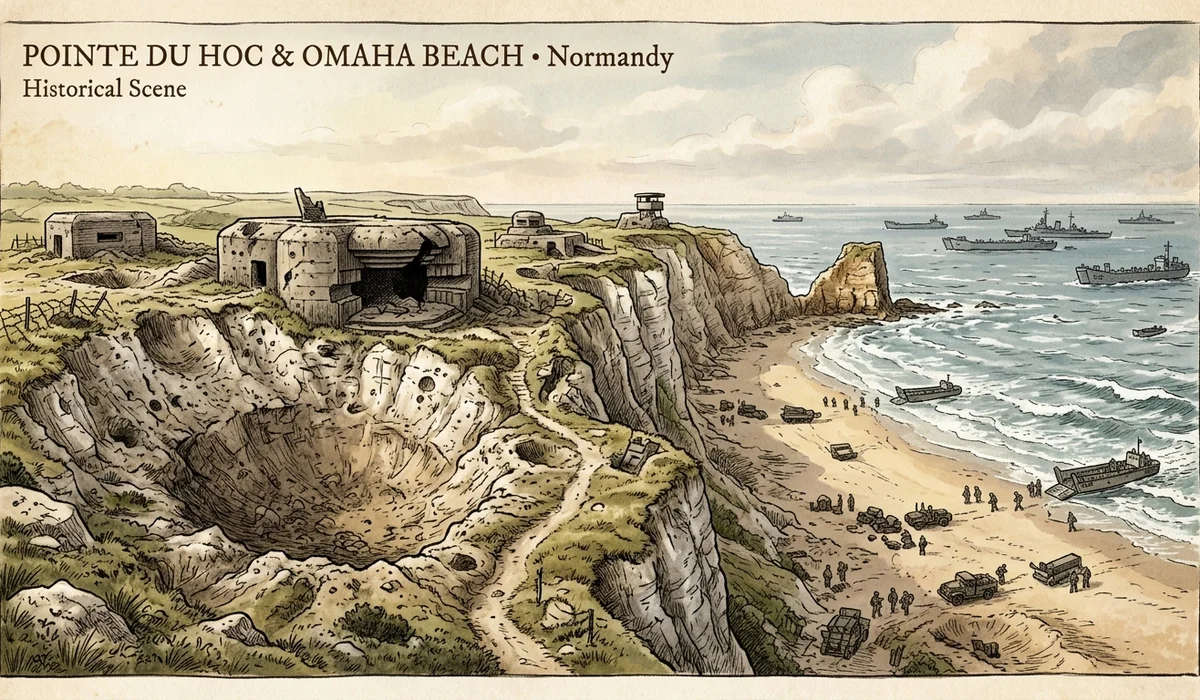
One of the greatest strengths of Solosky’s guide is its balanced multinational coverage. While many American-focused publications concentrate exclusively on the American sectors (Omaha and Utah), Solosky provides thorough guidance for all five Allied landing beaches:
1. The American Sectors: Omaha Beach, Utah Beach, and Pointe du Hoc
Solosky guides visitors through the somber bluffs of Omaha Beach, explaining why the topography proved so lethal for the 1st and 29th Infantry Divisions. At Pointe du Hoc, his descriptions bring the heroic cliff-scaling assault of the 2nd Ranger Battalion into sharp focus. Over in the Cotentin Peninsula at Utah Beach and Sainte-Mère-Église, the guide seamlessly weaves the airborne drops of the 82nd and 101st Airborne Divisions into accessible driving routes.
2. The British and Canadian Sectors: Gold, Juno, and Sword Beaches
The book provides dedicated chapters for Gold Beach (British 50th Division and the Arromanches Mulberry Harbor), Juno Beach (Canadian 3rd Division and the exceptional Juno Beach Centre), and Sword Beach (British 3rd Division and the daring glider assault on Pegasus Bridge). When I analyzed the British sector coverage, I noticed how clearly Solosky explains the remnants of the artificial Mulberry harbors at Arromanches, turning concrete caissons into vivid engineering feats.
For those interested in historical narratives set during this era, our review of All the Light We Cannot See provides powerful literary context on the civilian and military landscapes of wartime France.
Standout Feature: The Normandy American Cemetery Map and Human Stories
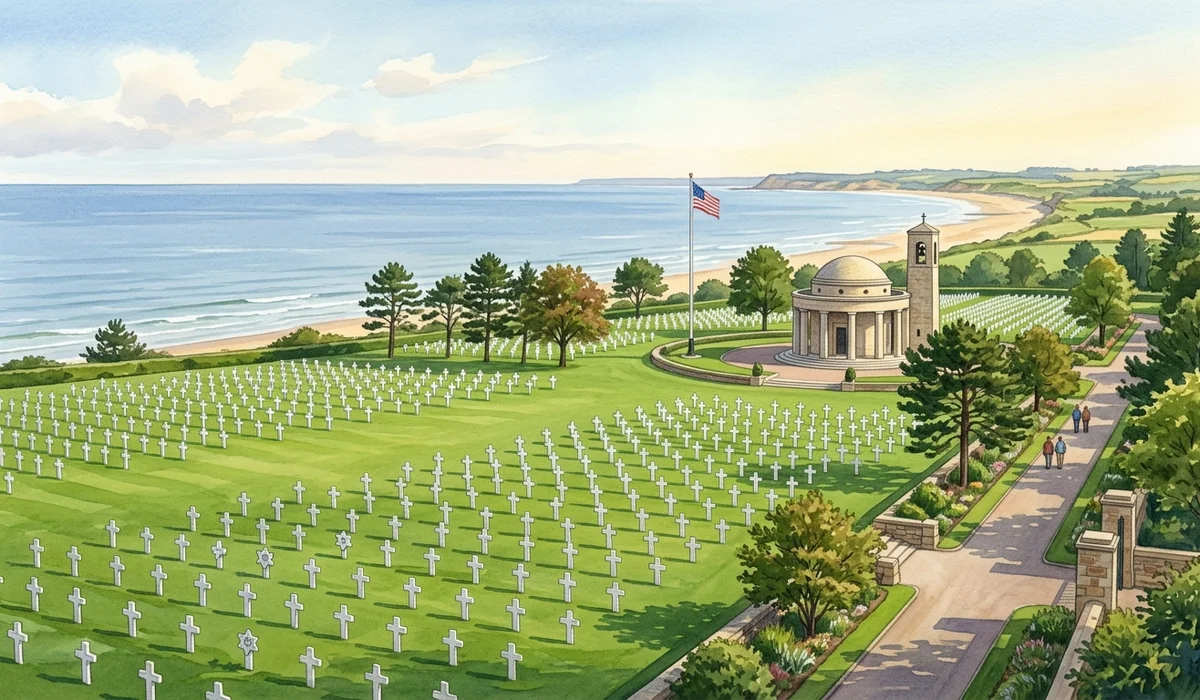
For most visitors, stepping onto the pristine emerald lawns of the Normandy American Cemetery at Colleville-sur-Mer is the emotional pinnacle of their journey. Covering 172.5 acres and containing 9,388 American burials, the cemetery can feel overwhelming to navigate independently.
Solosky provides a proprietary, easy-to-follow cemetery map that directs visitors to notable and poignant burial sites, including:
- Brigadier General Theodore Roosevelt Jr.: The oldest man and only general officer in the first wave on D-Day, awarded the Medal of Honor.
- The Niland Brothers: Preston and Robert Niland, whose tragic family story served as the real-world inspiration for Steven Spielberg’s Saving Private Ryan.
- The Bedford Boys: Soldiers from the small town of Bedford, Virginia, which suffered the nation’s highest proportional loss on D-Day.
- Father Joseph Verbis Lafleur and Medal of Honor Recipients: Giving personal voice and context to the individual sacrifices behind the symmetrical marble crosses and Stars of David.
When I read through these vignettes, what surprised me most was how effectively Solosky balances historical facts with heartfelt dignity. The guide also highlights the quiet church at Angoville-au-Plain, where two young American medics (Robert Wright and Kenneth Moore) treated over 80 wounded soldiers—both Allied and German—on bloodstained wooden pews that still stand today.
Practical Logistics: Itineraries, Transportation, Dining, and Lodging
Beyond historical context, The Traveling Professor’s Guide to the Normandy Invasion Beaches functions as a rugged, highly practical travel manual. Solosky draws directly from his experience curating small-group adventures through Small Group Tours by The Traveling Professor, sharing time-tested logistical advice:
1. Step-by-Step Itineraries: Structured plans for 1-day express trips from Paris, 2-day highlights, 3-day deep dives, and relaxed 4-day itineraries.
2. Transportation & Driving Guidance: Clear instructions on renting cars in Caen or Bayeux, navigating narrow French country roundabouts (rond-points), parking near historic sites, and rail connections from Paris Gare Saint-Lazare.
3. Curated Museum Rankings: Honest assessments of which museums offer the best educational value (such as the Airborne Museum in Sainte-Mère-Église and the Caen Mémorial) versus smaller regional exhibits.
4. Local Dining and Accommodations: Recommendations for charming hotels in Bayeux, seaside restaurants serving fresh Norman seafood, and local cider and Calvados distilleries.
To evaluate how clear instructional writing enhances reader engagement, check our educational guide on reading comprehension strategies and our tutorial on how to write an effective book review.
Foreword by Rear Admiral John E. Jolliffe, U.S. Navy (Ret.)
The credibility of Solosky’s work is further underscored by an insightful foreword contributed by Rear Admiral John E. Jolliffe, U.S. Navy (Ret.). Having traveled through Normandy under Solosky’s guidance, Admiral Jolliffe emphasizes that a meaningful visit requires both intellectual understanding and emotional openness.
Admiral Jolliffe notes that Solosky’s guide successfully avoids technical military jargon, allowing everyday travelers, military veterans, and multi-generational families to appreciate the courage, coordination, and enduring freedom secured on those French shores. For historical background on the campaign, Wikipedia’s comprehensive overview of the Normandy landings offers additional context on Allied planning.
Who Should Read This Guide?
In my view as an educator and reviewer, this book is specifically tailored for:
- First-Time Visitors to Normandy: Eliminating the stress of planning driving routes across unfamiliar rural French roads.
- Independent Self-Guided Travelers: Providing self-paced tour quality without the rigid schedules or high costs of large commercial bus tours.
- Families and Descendants: Helping children, parents, and grandchildren locate family-relevant battle sites and cemetery plots.
- Military History Enthusiasts: Offering a quick, reliable pocket reference to complement deeper academic reading like Cornelius Ryan’s The Longest Day.
For readers interested in analyzing reading difficulty across various genres, our resource on the Lexile framework explains how accessible non-fiction prose bridges complex history for general audiences.
Frequently Asked Questions (FAQ)
Where can I purchase the Normandy Invasion Beaches Travel Guide?
The guidebook is available in paperback and digital editions through major online booksellers and directly via The Traveling Professor’s official Normandy travel page.
How many days are recommended to visit the Normandy D-Day beaches?
While major highlights like Omaha Beach and the American Cemetery can be seen in a single full day from Paris, Steve Solosky recommends two to four days to explore all five beaches, Sainte-Mère-Église, Pointe du Hoc, and key museums without rushing.
Does the book cover Canadian and British landing beaches?
Yes. Unlike many US-centric guides, this book includes dedicated itineraries, maps, and historical explanations for Gold Beach, Juno Beach, Sword Beach, and Pegasus Bridge.
What makes this guidebook different from standard travel guides?
Written by a veteran tour leader with more than 25 years of on-the-ground experience, this guide focuses specifically on how to navigate the battlefields efficiently, avoid common logistical pitfalls, and understand the human stories behind the monuments.
Final Verdict: An Essential Companion for an Unforgettable Journey
In my experience reviewing specialized travel guides, The Traveling Professor’s Guide to the Normandy Invasion Beaches by Steve Solosky earns our highest recommendation. It demystifies the geography of the D-Day landings, honors the profound sacrifices of the Allied forces, and equips travelers with the practical tools necessary for a smooth, reverent, and deeply meaningful visit. Whether you are actively planning a journey to France or exploring World War II history from home, this guide is an invaluable addition to your bookshelf.
Please Write Your Comments