Anne of Green Gables Reading Level & Age Guide
19 Sep 2026
19
💡 Quick Answer
When I evaluate classic children’s literature for young readers, few titles generate as much passionate debate among educators as Lucy Maud Montgomery’s 1908 masterpiece, Anne of Green Gables. On the surface, the story of an imaginative, chatterbox orphan girl arriving at Green Gables on Prince Edward Island feels like an accessible coming-of-age story. However, when I look closely at the text through formal literacy metrics, the actual reading difficulty often catches parents and young readers off guard.
In my years as an elementary literacy specialist and reading intervention counselor, I have noticed that modern readers frequently encounter a significant linguistic step up when transitioning from contemporary chapter books to early 20th-century classics. Understanding the exact quantitative scores and qualitative nuances of Anne of Green Gables ensures that children enjoy Anne Shirley’s heartwarming misadventures without feeling overwhelmed by vintage syntax.

- Anne of Green Gables Reading Level & Literacy Benchmarks
- Quantitative Metrics Breakdown: Lexile, AR, and Guided Reading
- Qualitative Analysis: What Makes Anne of Green Gables Challenging?
- Content and Maturity Considerations for Parents
- Grade-by-Grade Reading Guide for Parents and Teachers
- Strategies to Support Young Readers Tackling Anne of Green Gables
- Frequently Asked Questions About Anne of Green Gables Reading Level
- Final Thoughts for Parents and Educators
Anne of Green Gables Reading Level & Literacy Benchmarks

To establish an accurate reading profile for Anne of Green Gables, we look across the four primary reading assessment systems used in American and international schools. The quantitative metrics reflect both sentence length, vocabulary density, and overall structural complexity.
| Assessment Metric | Official Score / Level | Target Grade Range | Target Age Group |
|---|---|---|---|
| Lexile Framework | 990L | 5th Grade – 8th Grade | 10 – 14 Years Old |
| Accelerated Reader (AR) | 5.3 | 5th Grade, 3rd Month | 10 – 12 Years Old |
| Guided Reading (Fountas & Pinnell) | Level V | 5th Grade – 6th Grade | 10 – 12 Years Old |
| Developmental Reading Assessment (DRA) | 50 | 5th Grade | 10 – 11 Years Old |
| Interest Level | Middle Grade (MG) | 4th Grade – 8th Grade | 9 – 14 Years Old |
As demonstrated in the table above, the quantitative frameworks converge squarely around the 5th-grade benchmark. However, as I frequently remind parents during reading assessments, a single numeric score does not tell the whole story. To fully grasp why the book earns a 990L Lexile rating—placing it alongside upper-middle-grade literature—we must examine how these framework scores are calculated.
For parents seeking to compare these metrics against broader standards, our comprehensive breakdown of the Lexile framework provides an in-depth look at how lexile scores correlate with grade-level performance.
Quantitative Metrics Breakdown: Lexile, AR, and Guided Reading
The 990L Lexile score assigned to Anne of Green Gables places it at the upper bound of 5th-grade reading and well into the expected range for 6th to 8th graders. For comparison, contemporary popular middle-grade titles like Harry Potter and the Sorcerer’s Stone (880L) or Percy Jackson & the Olympians (680L–740L) score noticeably lower in structural complexity. You can explore how these compare in our guide on Harry Potter reading level and age range.
The primary driver behind this high Lexile rating is Montgomery’s preference for periodic sentences, multi-clause descriptions, and elaborate Victorian vocabulary. Consider how Anne describes her surroundings: she rarely calls a landscape “pretty” when she can label it an “sublime expanse of emerald splendor.” These lengthy, ornate sentences elevate the prose density, requiring strong working memory and tracking skills from young readers.
The Accelerated Reader (AR) level of 5.3 indicates that the vocabulary and sentence structure match the average reading ability of a student in the third month of fifth grade. The book carries an AR point value of 17.0 points, reflecting a full-length novel of approximately 104,000 words. For a 10-year-old child, finishing a 17-point book represents a substantial milestone in reading endurance.
Under the Fountas & Pinnell Guided Reading system, Anne of Green Gables earns a Level V. Books at Level V feature complex themes, understated humor, historical settings, and unsimplified text structure. This places it alongside classics like The Chronicles of Narnia series and Charlotte’s Web, which serve as critical stepping stones toward high-school level literary analysis.

Qualitative Analysis: What Makes Anne of Green Gables Challenging?
While quantitative measures score sentence length and word frequency, qualitative analysis evaluates content, literary elements, and thematic depth. In my classroom work, I group the qualitative hurdles of Anne of Green Gables into three key areas:
1. 19th-Century Vocabulary and Archaic Expressions
Lucy Maud Montgomery wrote with an exceptionally rich, formal vocabulary reflective of early 19th- and 20th-century Canadian maritime culture. Readers encounter terms that rarely appear in modern juvenile fiction:
- Descriptive Adjectives: melancholy, romantic, sublime, precipitous, tempestuous, diaphanous, opinionated.
- Cultural & Historical Terms: carpet-bag, linsey-woolsey, bonnet, pin-money, psalmody, red-checked apron.
- Colloquial & Epoch Idioms: “depths of despair,” “kindred spirits,” “bosom friends,” “imagination running riot.”
When I read with 4th and 5th graders, I frequently observe students pausing not because they cannot decode the letters, but because the conceptual meaning of expressions like “apoplexy” or “providential intervention” requires context clues or dictionary work.
2. Figurative Language and Anne’s Monologues
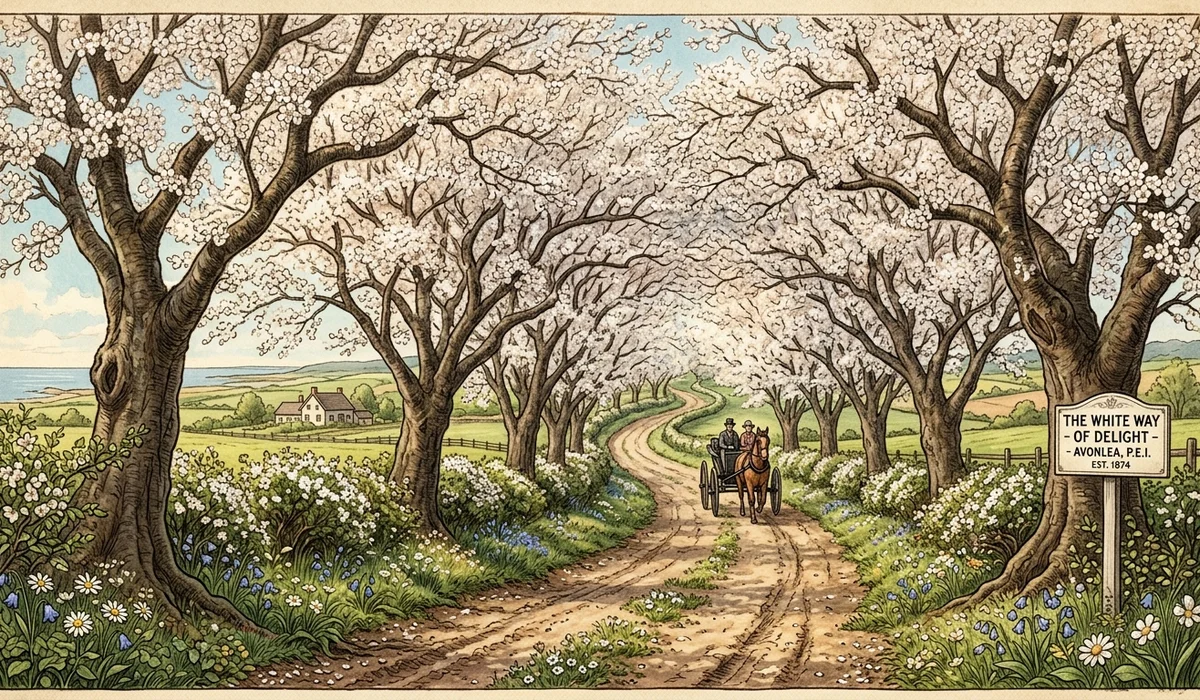
Anne Shirley is famous for her extravagant imagination and dramatic soliloquies. Her dialogue is filled with hyperbole, personification, metaphors, and romantic poetry citations. She renames geographical features—turning “Barry’s Pond” into the “Lake of Shining Waters” and an apple orchard road into the “White Way of Delight.”
For literal-minded children (especially those transitioning from straightforward chapter series like Magic Tree House), shifting between Anne’s romantic interpretations and Marilla Cuthbert’s stern, pragmatic reality demands an active understanding of literary perspective and irony.
3. Historical and Social Context of Edwardian Canada
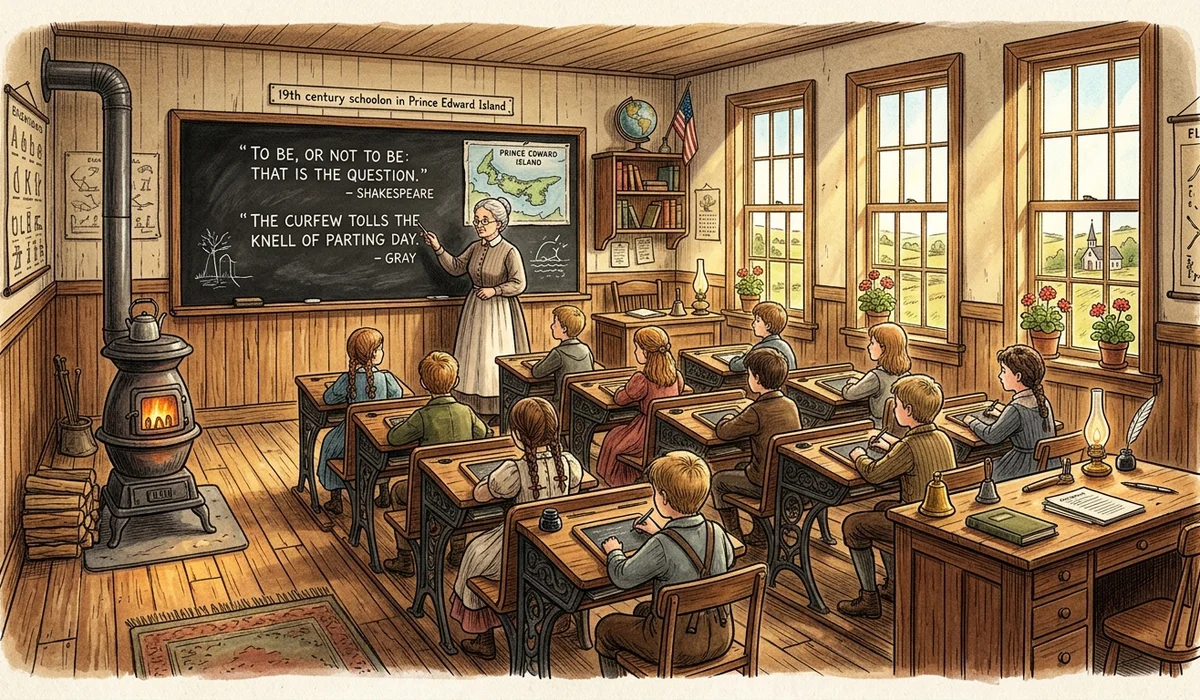
Set in the fictional community of Avonlea on Prince Edward Island, Canada during the late 1870s and 1880s, the story reflects historical social norms, church-centered social life, orphan apprenticeships, and strict gender expectations. Understanding Marilla’s reserve, Matthew’s shyness, and the community’s initial suspicion of an orphan child requires a touch of historical background knowledge.
For readers interested in the author’s fascinating life and historical setting, Wikipedia’s biography of Lucy Maud Montgomery offers valuable historical context on how her upbringing in Prince Edward Island inspired Avonlea.
Content and Maturity Considerations for Parents
From a emotional and developmental maturity standpoint, Anne of Green Gables is wonderfully wholesome, making it a favorite choice for family reading. However, parents should be aware of specific emotional themes and historical incidents:
- Orphanhood and Neglect Background: Before arriving at Green Gables, Anne experienced emotional neglect in overcrowded orphanages and foster homes where she was treated primarily as unpaid childcare help. While treated with delicate grace, her fear of being unwanted is a central emotional pillar.
- Accidental Intoxication Scene: In one famous comedic chapter, Anne accidentally serves Diana Barry currant wine instead of raspberry cordial, causing Diana to become intoxicated. The scene is handled with humorous innocence, but parents of younger readers may wish to explain the misunderstanding.
- Grief and Loss: The story contains moments of profound loss, particularly toward the final chapters when a beloved main character passes away unexpectedly. Anne must alter her academic plans to support Marilla, demonstrating inspiring maturity and resilience.
- Childhood Scuffles and Rivalries: Anne’s temper leads to classic rivalries, including smashing a slate over Gilbert Blythe’s head after he calls her “Carrots.” These incidents are resolved through character growth and mutual respect.
Because of these gentle handling of mature themes, the American Library Association and literacy organizations consistently rate Anne of Green Gables as an exemplary middle-grade selection that fosters empathy and character development.

Grade-by-Grade Reading Guide for Parents and Teachers
To help you determine whether your child or student is ready for Anne of Green Gables, I have structured this practical grade-by-grade roadmap:
3rd Grade (Ages 8–9): Read-Aloud or Adapted Editions
At this stage, most 3rd graders are consolidating their decoding skills and building fluency. While independent reading of the unabridged 990L text may cause frustration, 3rd graders thoroughly enjoy Anne of Green Gables as an evening read-aloud. Listening to a parent or teacher read allows children to absorb Montgomery’s elevated vocabulary while enjoying the humor. Alternatively, graphic novel adaptations or abridged classic editions serve as wonderful introductions.
4th Grade (Ages 9–10): Guided Reading & High-Capability Readers
Advanced 4th-grade readers who are comfortable with 5th-grade level texts can attempt the unabridged novel independently. I recommend keeping a dictionary or bookmark list handy for unfamiliar Victorian terms. If your student is moving beyond early chapter books, exploring our guide on 4th grade reading levels will help evaluate their reading readiness.
5th Grade to 6th Grade (Ages 10–12): The Sweet Spot for Independent Reading
This is the ideal target audience for Anne of Green Gables. Children in 5th and 6th grade possess the cognitive maturity to connect deeply with Anne’s quest for belonging, her academic ambition, and her friendship dynamics with Diana and Gilbert. They easily grasp the humor behind her scrapes while tackling the 990L Lexile vocabulary independently.
7th Grade to 8th Grade (Ages 12–14): Literary Analysis & Series Continuity
Middle school readers appreciate the deeper literary themes of identity, social expectations, and personal sacrifice in the later chapters. Students in this bracket often complete the novel quickly and seamlessly transition into the subsequent books in the series, such as Anne of Avonlea and Anne of the Island.
Strategies to Support Young Readers Tackling Anne of Green Gables
If your child is eager to read about Anne Shirley but feels intimidated by the dense Victorian text, I recommend using these proven reading strategies:
1. Start with the First Three Chapters Together: The opening chapters introduce Matthew Cuthbert’s journey to Bright River and Anne’s introductory monologues. Reading the first 30 pages together out loud establishes the cadence of Montgomery’s prose style.
2. Utilize Audiobooks alongside the Physical Text: Listening to a skilled voice narrator while following along in the book helps young readers bridge the gap between complex written vocabulary and spoken pronunciation.
3. Discuss Anne’s “Kindred Spirit” Vocabulary: Turn unfamiliar words into a fun exploration. Encourage your child to track Anne’s favorite grand words (like scope for imagination, divine, and horridly scandalized) in a reading journal.
4. Compare Assessment Systems: To understand how Anne of Green Gables fits alongside other classic and contemporary books in your child’s bookshelf, consult our comprehensive guide on reading level measurement systems for books.
Frequently Asked Questions About Anne of Green Gables Reading Level
What is the exact Lexile score for Anne of Green Gables?
The unabridged version of Anne of Green Gables has an official Lexile measure of 990L, placing it in the 5th to 8th-grade readability range.
Is Anne of Green Gables suitable for a 7-year-old or 8-year-old?
For independent reading, the original text is usually too challenging for 7 or 8-year-olds due to complex sentence structures and historical vocabulary. However, it makes an exceptional read-aloud story for children in this age bracket.
How many Accelerated Reader (AR) points is Anne of Green Gables worth?
Anne of Green Gables is worth 17.0 AR points with an AR book level of 5.3.
What reading level is Anne of Green Gables in Guided Reading (Fountas & Pinnell)?
It is classified as Guided Reading Level V, which corresponds to upper 5th-grade and 6th-grade reading benchmarks.
Are there abridged or graphic novel versions available for younger kids?
Yes! There are several well-crafted graphic novel adaptations (such as the version by Mariah Marsden) and early reader chapter book adaptations designed specifically for children in grades 2 through 4 (ages 7 to 9).
Final Thoughts for Parents and Educators
In my experience, introducing a child to Anne of Green Gables at the right developmental window creates a lifelong love for classic literature. While the 990L Lexile and 5.3 AR score demand genuine effort from middle-grade readers, Anne Shirley’s sparkling personality, humor, and heart make every page rewarding. By pairing the book with supportive reading strategies, parents and teachers can help young readers successfully navigate Avonlea and discover a true kindred spirit.
Please Write Your Comments