Holes Reading Level: Complete Age & Grade Guide
09 Oct 2026
1454
Determining the precise holes reading level is essential for parents, teachers, and school librarians looking to match Louis Sachar’s Newbery Medal-winning classic with the right reader. Since its publication in 1998, Holes has remained one of the most widely assigned novels in upper elementary and middle school classrooms throughout North America.
In my experience evaluating classroom literature and analyzing reading assessment benchmarks, Holes represents a rare pedagogical masterpiece. While its straightforward sentence mechanics place it within reach of fourth and fifth graders, its sophisticated narrative structure—featuring three interwoven historical timelines, folklore curses, and subtle social satire—challenges critical thinking skills in older students as well.
Whether your child was assigned Holes in English Language Arts or you are evaluating whether its desert survival themes and juvenile detention setting are appropriate for an independent reader, this comprehensive guide analyzes its Lexile score, Accelerated Reader (AR) level, Guided Reading level, Developmental Reading Assessment (DRA), and thematic depth.
- Holes Reading Level & Grade Equivalents
- The Master Readability & Assessment Matrix for Holes
- Plot Architecture, Interwoven Timelines & Narrative Depth
- Educational Value & Core Literary Themes
- Vocabulary Complexity & Tier 2 Language Demands
- Classroom Discussion Guide & Socratic Questions
- Age Suitability & Content Considerations for Parents
- Actionable Strategies to Support Readers with Holes
- Frequently Asked Questions About Holes Reading Level
Holes Reading Level & Grade Equivalents
💡 Quick Answer
When I analyzed standardized assessment data across elementary curricula, I found that Holes sits squarely in the sweet spot for intermediate readers. Its quantitative readability scores reflect accessible sentence lengths and familiar vocabulary, while its qualitative complexity provides rich opportunities for classroom discussions.
Educational guidelines on Scholastic Book Wizard reading profiles and independent media analyses on Common Sense Media family guides rate Holes as a cornerstone novel for developing inferential comprehension and thematic analysis.
To understand how quantitative text metrics compare across different school leveling frameworks, review our detailed guide on reading level vs grade level and our explanation of what is ATOS reading level.
The Master Readability & Assessment Matrix for Holes
The following matrix synthesizes the standardized quantitative and qualitative reading level scores for Holes across all major literacy measurement frameworks:
| Literacy Framework | Score / Level Benchmark | Recommended Grade Level | Target Age Group |
|---|---|---|---|
| Lexile Framework for Reading | 660L (Lexile Measure) | Grade 4 – Grade 6 | Ages 9 – 12 |
| Accelerated Reader (AR / ATOS) | 4.6 (Book Level) / 7.0 Points | Grade 4, Month 6 | Ages 9 – 12 |
| Fountas & Pinnell (F&P / Guided Reading) | Level V | Grade 5 – Grade 6 | Ages 10 – 12 |
| Developmental Reading Assessment (DRA) | Level 50 | Grade 5 End-of-Year | Ages 10 – 11 |
| Interest Level (IL) | Middle Grades (MG) | Grade 4 – Grade 8 | Ages 9 – 14 |
| Word Count | 47,078 Words (233 Pages) | Upper Elementary / MS | — |
Plot Architecture, Interwoven Timelines & Narrative Depth
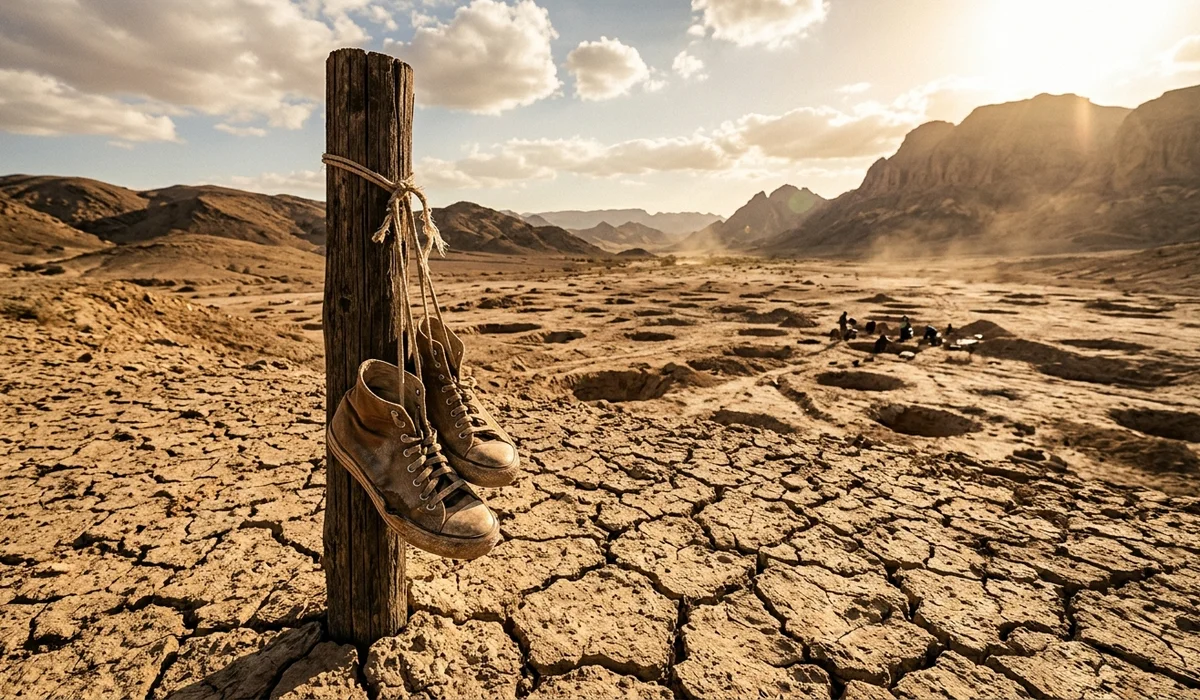
At first glance, Holes tells the quirky story of Stanley Yelnats IV, an unlucky boy who is wrongfully convicted of stealing a pair of famous sneakers donated to a homeless shelter by baseball star Clyde “Sweet Feet” Livingston. Sentenced to eighteen months at Camp Green Lake—a juvenile correctional facility in a barren Texas desert—Stanley and his fellow inmates are forced by the sinister Warden to dig one five-foot-deep, five-foot-wide hole every single day under the scorching sun.
In my classroom reading consultations, I frequently point out how Louis Sachar ingeniously braids three separate timelines across centuries:
⏳ The 3 Interlocking Timelines in Holes
- 1. The Present Day (Camp Green Lake): Stanley Yelnats and Hector “Zero” Zeroni endure brutal physical labor, toxic rattlesnakes, yellow-spotted lizards, and unearth clues to buried treasure.
- 2. The 19th Century Wild West Legend: Schoolteacher Katherine Barlow falls in love with onion farmer Sam, faces systemic racial violence, and transforms into the feared outlaw “Kissin’ Kate Barlow.”
- 3. The 19th Century Latvian Folklore: Elya Yelnats seeks the hand of Myra Menke, forgets his promise to Madame Zeroni after receiving a magical pig, and triggers the generational “no-good-dirty-rotten-pig-stealing” family curse.
When I analyzed student reading assessments on narrative tracking, readers who struggle with nonlinear storytelling benefited immensely from creating simple timeline charts. Every seemingly absurd detail—from sweet spiced peach jam (Sploosh) to foul-smelling foot deodorants—snaps together with clockwork precision during the climax.
For other celebrated middle-grade novels that weave high emotional resonance with accessible language, explore our breakdown of the Wonder book reading level and The Wild Robot reading level and age guide.
Educational Value & Core Literary Themes

Holes is celebrated by educators because it integrates rigorous literary concepts without feeling didactic or heavy-handed.
1. Justice, Incarceration, and Systemic Cruelty
Camp Green Lake masquerades as a character-building rehabilitation camp, but is actually an illegal labor exploitation ring designed to locate buried outlaw gold for the Warden’s family. The novel prompts critical discussions on fairness, judicial errors, and the abuse of authority. When I analyze modern children’s literature, few books expose institutional corruption with such sharp comedic irony and ethical clarity.
2. Illiteracy, Dignity, and Peer Mentorship
One of the most poignant subplots centers on Zero (Hector Zeroni), whom the camp counselors and boys dismiss as unintelligent simply because he is quiet and unable to read. When Stanley agrees to teach Zero how to read in exchange for help digging his daily hole, their mutual respect forms the moral spine of the story. In my literacy coaching practice, I highlight this relationship to illustrate how literacy empowers personal agency and dismantles social stigma.
3. Historical Racism and Generational Consequences
The tragic romance between Katherine Barlow (a white woman) and Sam (a Black onion seller) exposes 19th-century segregation and racial violence in the American West, providing historical context for why Green Lake dried up into a desolate desert. Sachar illustrates how historical prejudice echoes across centuries, directly impacting the descendants of both victim and oppressor.
If your young reader loves animal clan warfare and epic quests with rich lore, check out our curated guide to books like Wings of Fire.
Vocabulary Complexity & Tier 2 Language Demands
Although Holes maintains a moderate Lexile score of 660L, it introduces students to valuable Tier 2 and Tier 3 academic vocabulary embedded naturally within desert survival and legal contexts.
| Vocabulary Term | Context in Holes | Contextual Meaning | Educational Application |
|---|---|---|---|
| Perseverance | Enduring extreme desert heat and physical labor | Continuing effort despite difficulty or delay | Character growth discussions and goal setting |
| Desolate | The barren landscape of dried-up Camp Green Lake | Empty, bleak, and devoid of life or warmth | Setting analysis and sensory imagery exercises |
| Incurable | Toxic venom from yellow-spotted lizards | Unable to be healed, remedied, or reversed | Science integration and figurative language |
| Delirious | Stanley and Zero climbing God’s Thumb | Disoriented or hallucinating from dehydration | Psychological state analysis and pacing |
| Defiance | Kissin’ Kate Barlow confronting the Sheriff | Open resistance or bold disobedience | Historical rebellion and moral ethics |
| Humiliation | Stanley’s wrongful arrest and trial testimony | Loss of dignity, pride, or public respect | Empathy building and social-emotional learning |
Classroom Discussion Guide & Socratic Questions
For teachers and parents guiding book clubs, these analytical questions foster deeper inferential comprehension:
1. Symbolism of the Holes: Why does digging holes serve both as physical punishment and a metaphor for searching for truth? How does Stanley’s physical transformation mirror his internal character growth?
2. The Nature of Fate vs. Agency: Is the Yelnats family truly cursed, or does Stanley break free through conscious moral choices, selflessness, and loyalty to Zero?
3. The Importance of Names: Why do the boys at Camp Green Lake discard their birth names for nicknames like X-Ray, Magnet, and Armpit? How does reclaiming their real names signal personal redemption?
4. The Power of Literacy: How does learning to read transform Zero’s sense of self-worth and future opportunities?
Age Suitability & Content Considerations for Parents
While Holes is a middle-grade masterpiece, parents evaluating content appropriateness should be aware of several mild thematic elements:
⚠️ Content Advisory Summary
- Violence & Danger: Fistfights between boys, harsh punishments by counselors, venomous yellow-spotted lizard bites, and the off-screen historical shooting of Sam the onion man.
- Mild Language & Teasing: Boys use nicknames (Armpit, Squid, X-Ray, Magnet) and engage in realistic adolescent teasing, but the text contains zero explicit profanity.
- Emotional Themes: Themes of homelessness, child abandonment, juvenile delinquency, and systemic oppression are handled with empathy, humor, and hope.
In my literacy coaching sessions, I consistently recommend Holes for independent reading starting at age 9 or 10 (4th grade), while 3rd graders benefit greatly from reading it alongside a parent or listening to the acclaimed audiobook narrated by Kerry Beyer.
Actionable Strategies to Support Readers with Holes
If your child or student is tackling Holes, these structured strategies will maximize comprehension and critical thinking:
1. Character Map & Nickname Tracker: Have students track each boy’s real name versus their camp nickname (e.g., Hector Zeroni / Zero, Rex / X-Ray, Theodore / Armpit) to highlight how identity is constructed.
2. Cause-and-Effect Timeline Chart: Keep a three-column running log connecting events from 1888 Latvia, 1898 Green Lake, and the present day.
3. Paired Reading of Sequel: After finishing Holes, readers can continue with Louis Sachar’s official companion novel, Small Steps (focusing on Armpit and X-Ray) or explore his whimsical Wayside School series.
To help students systematically advance their reading comprehension metrics and vocabulary breadth, explore our guide on how to improve Lexile score and our tips on how to develop reading habits.
Frequently Asked Questions About Holes Reading Level
Is Holes suitable for a 4th grader?
Yes. With a Lexile measure of 660L and an AR level of 4.6, strong 4th-grade readers can read Holes independently. For younger or struggling 4th graders, reading with an adult helps navigate the shifting historical flashbacks.
Why is Holes considered a middle-grade book instead of YA?
Holes is classified as middle-grade because its vocabulary is accessible, its protagonist is fourteen years old, and it avoids explicit violence, romance, and graphic language. However, its complex plot structure makes it appealing to older young adults as well.
How long does it take an average child to read Holes?
At 47,078 words (approximately 233 pages across 50 short chapters), an average middle-grade student reading at 150 words per minute will complete Holes in approximately 5 to 6 hours of total reading time.
What reading awards has Holes won?
Holes won the prestigious 1999 Newbery Medal for the most distinguished contribution to American children’s literature, the 1998 National Book Award for Young People’s Literature, and the Boston Globe-Horn Book Award.
What book should my child read after finishing Holes?
Excellent follow-up titles include Small Steps by Louis Sachar (the companion novel), Maniac Magee by Jerry Spinelli, Wonder by R.J. Palacio, The Westing Game by Ellen Raskin, and The Giver by Lois Lowry.
Please Write Your Comments