4th Grade Reading Level — Complete Parent & Teacher Guide (2026)
12 Jun 2026
1435
Fourth grade is where reading stops being a skill kids are taught and becomes the tool they use to learn everything else. Science textbooks, social studies chapters, math word problems — suddenly every subject depends on whether your child can read independently, fluently, and with comprehension. That shift makes 4th grade one of the most consequential years in a child’s education, and knowing exactly where your child stands can make all the difference.
What Is the 4th Grade Reading Level?

Quick answer: Fourth graders (ages 9–10) typically read between 740L and 940L on the Lexile scale, according to MetaMetrics. In the classroom, that maps to Fountas & Pinnell levels P–S and a DRA level of 38–44. AR (Accelerated Reader) levels span roughly 3.0–6.9, though that range varies widely by school program. If your child’s reading score falls anywhere in this zone, they’re on track.
The Lexile Framework, developed by MetaMetrics, is the most widely used reading measure in U.S. schools. A Lexile number captures both text complexity (vocabulary demand, sentence length) and reader ability using the same scale — so a student reading at 800L is well-matched with a book measured at 800L.
Here’s how 4th grade reading levels compare across the major systems:
| System | 4th Grade Range | What It Means |
|---|---|---|
| Lexile (MetaMetrics) | 740L–940L | Typical reader band for grade 4 |
| Lexile (stretch) | up to 1130L | College and career readiness text range |
| AR Level (Renaissance) | 3.0–6.9 | Grade-equivalent scale; varies by school |
| Fountas & Pinnell (F&P) | P–S | Guided reading levels used in classrooms |
| DRA (Developmental Reading Assessment) | 38–44 | Assessed in one-on-one teacher conferences |
Understanding the bands: A child reading below 640L is performing below typical 4th grade expectations and may need additional support. Students reading between 740L and 940L are solidly on grade level. Those reading above 940L — into the 940L–1200L+ range — are considered advanced readers for their grade. Most classrooms intentionally expose students to texts at the higher end (stretch texts), but independent reading should sit comfortably within the 740L–940L band.
How to Know If Your Child Is Reading at 4th Grade Level

Schools use several formal tools to measure reading level throughout the year. DIBELS (Dynamic Indicators of Basic Early Literacy Skills) assesses oral reading fluency — how accurately and smoothly a child reads aloud. The Scholastic Reading Inventory (SRI) produces a Lexile score. Schools using the Renaissance platform assign Accelerated Reader quizzes after book reading to track both comprehension and points earned.
But parents don’t need a test to spot a reading struggle. Here are the clearest signs:
Signs your child is reading at grade level:
- Reads a chapter book independently for 20–30 minutes without losing the thread
- Asks about vocabulary words without getting stuck on basic ones
- Can summarize what happened and explain why a character made a choice
- Finishes a page in roughly 1–2 minutes without visible effort
Signs your child may be reading below grade level:
- Consistently takes more than 2–3 minutes per page
- Encounters more than 5 unknown words per page on a regular basis
- Avoids reading or makes excuses to stop
- Retells only surface events (“they went to school”) with no detail or inference
The five-finger rule: Have your child open any book to a random page and start reading silently. Ask them to hold up one finger for each word they don’t know. If they reach five fingers before the page ends, the book is likely too hard for independent reading — but could work well as a read-aloud. Zero or one finger? They may be ready for something more challenging.
One important note: a single score or a single bad reading day doesn’t define your child’s level. Reading assessments should be viewed as snapshots, not permanent labels. If you’re unsure whether your child’s score is where it should be, the most accurate next step is to speak directly with their classroom teacher or reading specialist.
Best Books for 4th Graders (By Reading Level)
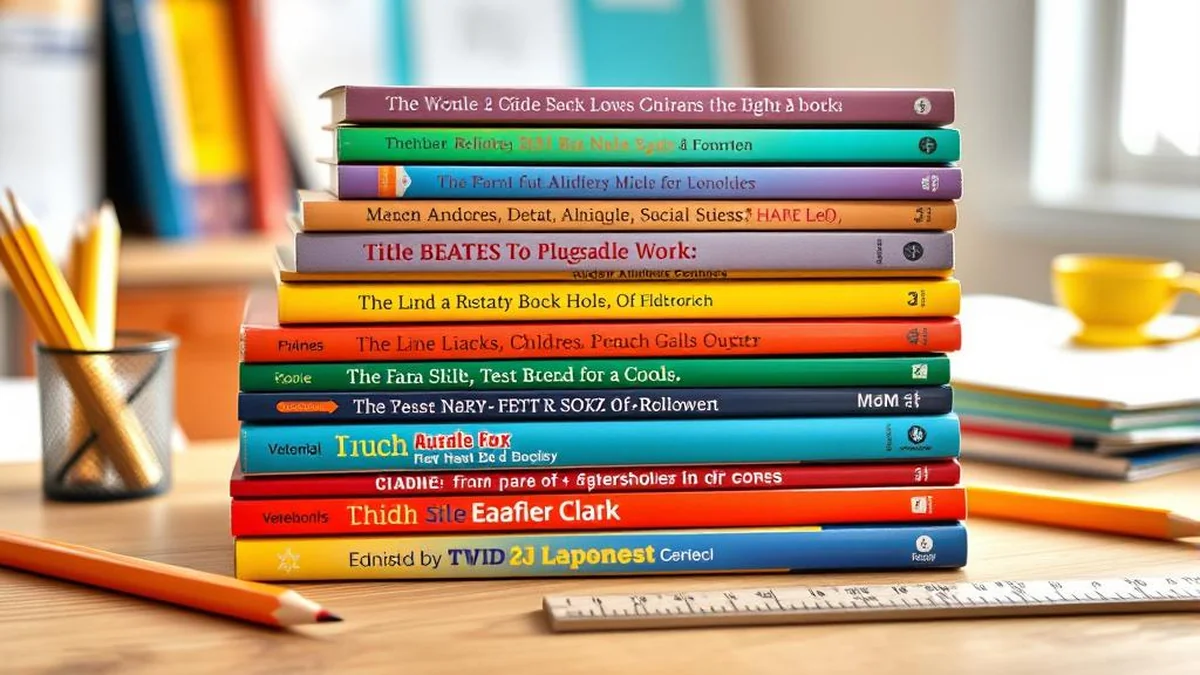
The right book can shift a reluctant reader into someone who begs for five more minutes at bedtime. Matching a book to reading level matters, but so does interest — a 4th grader obsessed with survival stories may push through a higher Lexile because the topic is irresistible.
| Book | Lexile | AR Level | AR Points | Best For |
|---|---|---|---|---|
| Charlotte’s Web | 680L | 4.4 | 4 | Below-grade or building confidence |
| The BFG | 720L | 4.8 | 6 | Reluctant readers; funny, inventive language |
| Matilda | 840L | 5.0 | 7 | Solid on-grade readers; strong girl protagonist |
| Diary of a Wimpy Kid (950L) | 950L | 5.2 | 4 | Above-grade or advanced 4th graders |
| Hatchet | 1020L | 5.7 | 7 | Advanced readers; high-interest survival theme |
A few things worth knowing about these titles: Charlotte’s Web at 680L sits technically below the 4th grade band, but its emotional complexity and vocabulary make it a meaningful read at this age — don’t write it off because the Lexile is lower. Hatchet at 1020L stretches above the typical range, but reluctant boy readers often power through it because survival stories are gripping.
If your child is working through a lower Lexile and needs a series to build momentum, see our detailed breakdown of the Junie B. Jones series — a beloved catch-up option for 4th graders who need accessible books with high readability and humor.
You can also search the full database by Lexile range using the free Lexile Find a Book tool from MetaMetrics, which lets you filter by interest category, book length, and Lexile band.
What Reading Level Systems Are Used in 4th Grade?
Fourth grade classrooms typically use multiple reading measurement systems simultaneously — which can confuse parents who receive different numbers from different tests. Here’s what each system actually measures and where you’re likely to see it.
Lexile Framework (MetaMetrics)
Lexile scores appear on most state standardized tests and on SRI (Scholastic Reading Inventory) reports that schools send home. A student’s Lexile and a book’s Lexile are measured on the same scale, which makes matching readers to texts straightforward. If your child tests at 820L, look for books in the 770L–870L range for comfortable independent reading.
AR (Accelerated Reader) — Renaissance
AR levels appear as a decimal (e.g., 4.5) representing approximate grade and month equivalents. A 4th grader might read books from 3.0 to 6.9 depending on ability. Schools using Renaissance Accelerated Reader assign reading quizzes after each book to verify comprehension and award points. AR is a classroom management and incentive tool as much as a measurement system.
Fountas & Pinnell Guided Reading Levels (F&P)
F&P levels run from A to Z and are primarily used for small-group instruction. A 4th grader reading on grade level typically works at levels P through S. Teachers use one-on-one running records to assign these levels; parents rarely see them on report cards, but may hear them mentioned in parent-teacher conferences.
DRA (Developmental Reading Assessment)
DRA uses a numeric scale (4th grade: 38–44) and is administered individually by a teacher. The assessment checks both fluency and comprehension through oral reading and retelling. DRA levels are commonly used in K–5 programs that don’t use AR.
To see exactly how Lexile, AR, and Guided Reading levels relate to each other across all grades — and how to translate between them — read our full comparison of reading level systems.
If you want a quick answer to whether your child’s Lexile is on track compared to national grade-level norms, that guide breaks it down by grade from K through 12.
What to Do If Your 4th Grader Is Behind in Reading

Important: Reading below grade level does not mean your child isn’t intelligent. Many factors affect reading development — including how reading was taught in earlier grades, processing differences, English language learner status, and access to books at home. A lower Lexile score is data, not a verdict.
If your child consistently struggles with on-grade texts, here’s where to start:
Read aloud together — past the age you think you should. Research consistently shows that children’s listening comprehension exceeds their reading comprehension well into middle school. Reading a chapter together each night exposes your child to vocabulary, sentence structures, and ideas they couldn’t access independently. This is not “baby stuff” — it’s legitimate reading development.
Pair audiobooks with print. Listening to a book while following along in the text is a proven strategy for building fluency and vocabulary simultaneously. It’s especially effective for books slightly above a child’s current level. The audiobook carries the load while the eyes build the connection between sound and text.
Find a series they can’t put down. Series books build reading stamina because each book reuses the same characters, settings, and vocabulary. The cognitive overhead drops with each new installment, so the child can focus on comprehension and enjoyment rather than decoding. The Junie B. Jones series is a strong choice for 4th graders reading below grade — the humor and familiar format are genuinely engaging, not condescending.
Talk about what they’re reading. Ask specific questions: “What did you think about the choice she made on page 12?” or “Did that ending make sense to you?” Comprehension lives in conversation. A child who discusses books develops reading stamina faster than one who reads silently and moves on.
When to ask for a formal evaluation. If your 4th grader is reading more than one full year below grade level — below roughly 600L — and has been struggling since 2nd or 3rd grade despite support, request a reading evaluation through your school. Schools are required to evaluate students who may need special education services, including reading intervention. You don’t need to wait for the teacher to suggest it; you can make the request in writing.
Summer loss is also real. Fourth graders who don’t read over the summer typically lose 2–3 months of reading progress by fall. Six books over summer break — any books — is enough to maintain level.
Frequently Asked Questions About 4th Grade Reading Levels
What is a good Lexile score for 4th grade?
According to MetaMetrics, a Lexile score between 740L and 940L is typical for 4th grade students (ages 9–10). Scores below 640L may indicate below-grade reading, while scores above 940L suggest an advanced reader. These ranges are guidelines, not rigid cutoffs — your child’s score should be interpreted alongside teacher observations and comprehension data.
What is a 4th grade AR reading level?
AR (Accelerated Reader) levels for 4th grade typically fall between 3.0 and 6.9, where the number before the decimal represents approximate grade level. A score of 4.5 means the student is reading at a level typical for 4th grade, 5th month. Because AR ranges vary by school program and individual student goals, ask your child’s teacher for their specific AR goal range.
What F&P level should a 4th grader be at?
On grade level, 4th graders should be reading at Fountas & Pinnell levels P through S. These correspond to chapter books with more complex plots, multiple characters, and longer chapters. Students below level O at the start of 4th grade typically receive small-group reading intervention.
What if my 4th grader reads at a 2nd grade level?
A significant gap — two or more grade levels below expectations — warrants a conversation with your child’s teacher and possibly a formal reading evaluation. Early intervention is significantly more effective than waiting. This does not mean your child won’t catch up; many students with reading gaps make strong progress with targeted support.
Is Diary of a Wimpy Kid appropriate for 4th grade reading level?
At 950L, Diary of a Wimpy Kid sits just above the typical 4th grade band (740L–940L), making it ideal for students reading at or above grade level. The humor and visual format also make it one of the best entry points for reluctant readers. See our full breakdown of the Diary of a Wimpy Kid reading level for more detail on age-appropriateness and which books in the series to start with.
4th Grade Reading at a Glance
- Ages: 9–10
- Lexile range: 740L–940L (MetaMetrics typical band)
- Below grade: under 640L
- Advanced: 940L–1200L+
- AR level: 3.0–6.9
- F&P level: P–S
- DRA level: 38–44
- Five-finger rule: 5+ unknown words per page = too hard for independent reading
For a complete breakdown of Lexile ranges at every grade from kindergarten through 12th grade, the complete grade-level Lexile chart gives you every band in one place — useful if you want to see where 4th grade fits into the full K–12 progression or if you’re tracking a child across multiple years.
The single best next step: ask your child’s teacher for their most recent Lexile or AR score, then use the Lexile Find a Book tool to pull up five books within their current range on topics they actually care about. Put those books in front of them this week.
Please Write Your Comments