The Spiderwick Chronicles Reading Level: Complete Parent Guide
14 Oct 2026
1124
Determining the precise spiderwick chronicles reading level is vital for parents and educators seeking to bridge the gap between early illustrated readers and dense middle-grade fantasy. Created by the powerhouse duo of author Holly Black and illustrator Tony DiTerlizzi, The Spiderwick Chronicles has served as a gateway into modern magical realism for millions of young readers since its debut in 2003.
With its gothic Victorian atmosphere, intricate ink-and-wash creature drawings, and fast-paced sibling dynamics, the series delivers high-stakes adventure without overwhelming developing readers. But at what grade and age does a child possess the vocabulary and emotional maturity to fully appreciate the Grace family’s encounter with the faerie realm?
In this comprehensive guide, we analyze standardized reading benchmarks—including Lexile measures, Accelerated Reader (AR) scores, Guided Reading levels, and Developmental Reading Assessment (DRA) metrics—alongside content considerations to help you decide if your child is ready for the series.
- Spiderwick Chronicles Reading Level & Grade Equivalents
- Plot Architecture & The Mystery of the Grace Estate
- Book-by-Book Breakdown: Lexile, AR, and F&P Scores
- Vocabulary Complexity, Syntax, and Linguistic Structure
- Age Appropriateness, Themes, and Content Considerations for Parents
- The Spiderwick Chronicles vs. Beyond the Spiderwick Chronicles
- Actionable Tips for Parents and Teachers
- Frequently Asked Questions
Spiderwick Chronicles Reading Level & Grade Equivalents
💡 Quick Answer
When I evaluated the quantitative reading metrics across the series, what stood out immediately was how well-balanced the books are for transitional readers. Unlike 300-page high fantasy novels that can intimidate an eight-year-old, each installment of The Spiderwick Chronicles is concise, clocking in at approximately 10,000 to 18,000 words.
Here is the master reading metric summary across major literacy frameworks:
| Assessment Framework | Score / Level Range | Grade Equivalent | Developmental Reader Stage |
|---|---|---|---|
| Lexile Measure | 600L – 730L | 3rd – 5th Grade | Fluent Transitional Reader |
| Accelerated Reader (AR) | 4.0 – 4.4 (ATOS) | 4th Grade, Months 0–4 | Independent Reader |
| Guided Reading (F&P) | Level Q – R | Late 3rd – 4th Grade | Advanced Chapter Reader |
| DRA Level | Level 38 – 40 | 4th Grade Benchmark | Fluent Comprehension |
| Target Age Range | 7 – 11 Years Old | Grades 2 – 6 | Elementary to Early Middle |
| Total Series Length | 5 Books (~125 pages each) | Serialized Novella Arc | High-Stamina Stepping Stone |
If you are currently evaluating other popular classroom titles, our analysis of The Wild Robot reading level and the Percy Jackson reading level and age guide offers an insightful side-by-side comparison of text complexity and thematic escalation.
Plot Architecture & The Mystery of the Grace Estate
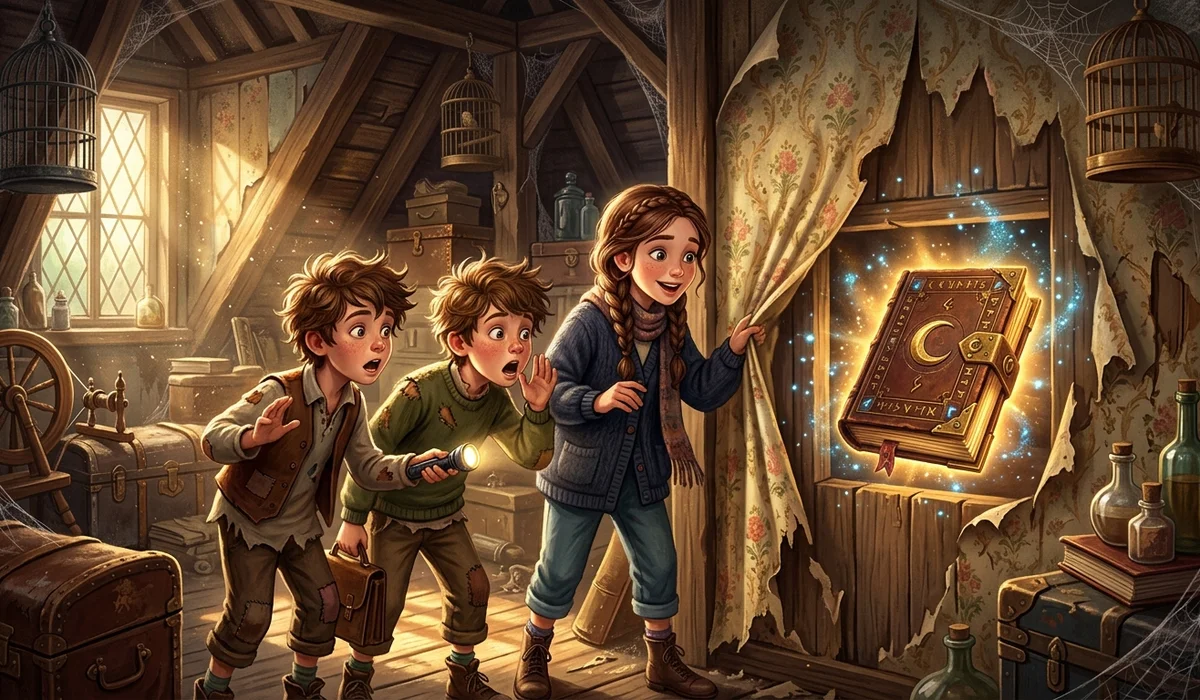
The overarching story begins when nine-year-old identical twins Jared and Simon Grace, along with their thirteen-year-old sister Mallory and recently divorced mother, move into the dilapidated Spiderwick Estate—a sprawling, gothic Victorian mansion inherited from their eccentric Great-Aunt Lucinda.
When strange, malicious pranks occur throughout the house—salt shakers emptied, hair tied to bedposts—the family unfairly blames Jared, who is struggling with anger and resentment following his parents’ separation. Desperate to clear his name, Jared investigates odd noises inside the walls and discovers a secret room accessible only through a hidden dumbwaiter.
Inside, he discovers Arthur Spiderwick’s Field Guide to the Fantastical World Around You—a handwritten, leather-bound compendium detailing fairies, brownies, boggarts, goblins, and ogres that coexist unseen alongside humanity. By opening and reading the book, Jared inadvertently breaks an ancient oath, alerting the ruthless ogre leader Mulgarath and his goblin hordes, who will stop at nothing to possess the guide and dominate both magical and mortal realms.
In my classroom experience, children relate instantly to Jared’s emotional struggle. He is not a flawless mythical hero; he is a hurt child coping with family turmoil whose bravery and loyalty are tested at every turn.
Book-by-Book Breakdown: Lexile, AR, and F&P Scores
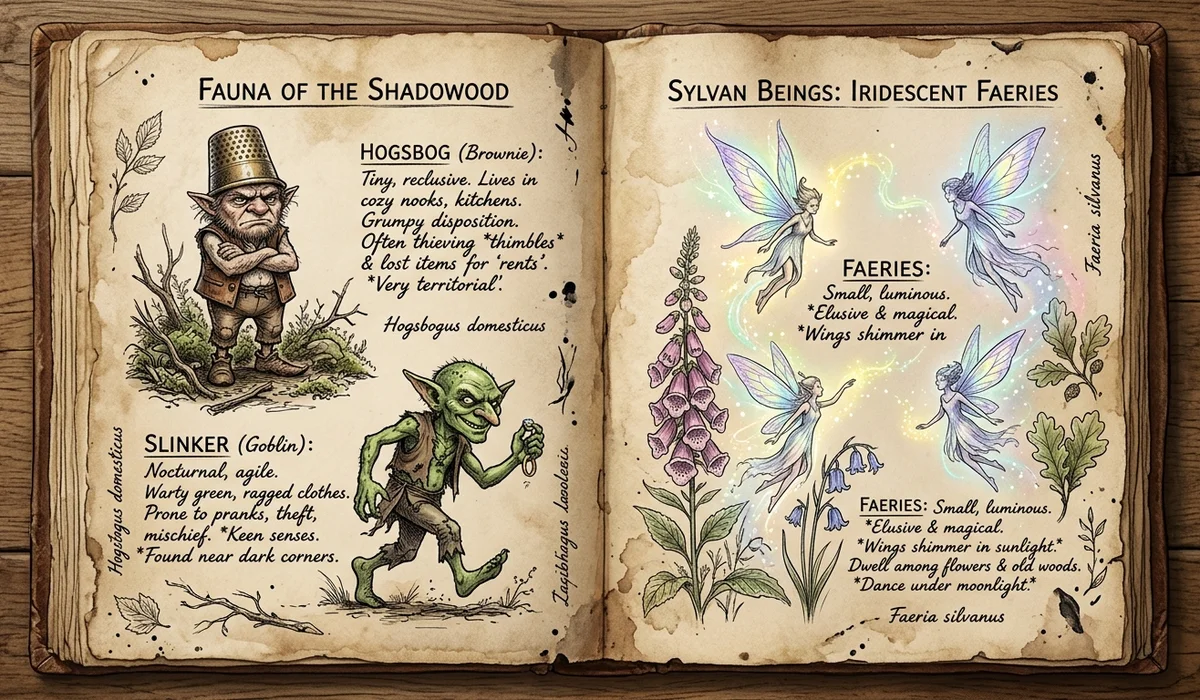
Because each volume in The Spiderwick Chronicles functions as a serialized chapter in a continuous arc, the reading level remains remarkably consistent, with a gentle upward curve as the stakes rise.
When I checked the official database metrics from Renaissance Learning and MetaMetrics, I recorded the following book-by-book assessment data:
| Book # | Title | Publication | Word Count | Lexile | AR Level (ATOS) | AR Points | Guided Reading |
|---|---|---|---|---|---|---|---|
| Book 1 | The Field Guide | 2003 | 10,753 | 600L | 4.2 | 2.0 pts | Level Q |
| Book 2 | The Seeing Stone | 2003 | 12,238 | 650L | 4.0 | 2.0 pts | Level Q |
| Book 3 | Lucinda’s Secret | 2003 | 12,790 | 660L | 3.9 | 2.0 pts | Level R |
| Book 4 | The Ironwood Tree | 2004 | 14,312 | 670L | 4.3 | 2.0 pts | Level R |
| Book 5 | The Wrath of Mulgarath | 2004 | 17,985 | 730L | 4.4 | 3.0 pts | Level R |
Understanding how Accelerated Reader calculates points based on word count and text complexity helps demystify these scores. For a deeper breakdown of how ATOS equations work, review our complete guide on what is accelerated reader level.
To further cross-reference these measures with school benchmarking systems, you can also consult our Fountas and Pinnell reading levels guide and our comprehensive DRA reading levels guide.
Vocabulary Complexity, Syntax, and Linguistic Structure
Why does a 120-page book with extensive illustrations register at a 4th grade reading level? When I analyzed the linguistic texture of Holly Black’s prose, several factors explained the elevated readability scores:
1. Rich Descriptive Vocabulary: Rather than sticking to basic elementary sight words, Black incorporates sophisticated descriptive vocabulary:
- Architecture & Decay: “dilapidated”, “Victorian”, “mansard roof”, “dumbwaiter”, “linoleum”
- Natural Sciences: “specimens”, “dissection”, “foliage”, “botanical”, “habitat”
- Mythological Lore: “phooka”, “boggart”, “glamour”, “sprite”, “chimera”
2. Compound-Complex Sentence Structures: While the dialogue is snappy and realistic, narrative descriptions frequently employ subordinate clauses, semicolon transitions, and sensory prepositional phrases.
3. Illustrative Scaffolding: DiTerlizzi’s pencil illustrations are not decorative filler; they serve an active pedagogical purpose. When a difficult vocabulary term like “griffin” or “brownie” appears, the accompanying field guide drawing immediately provides visual context, reducing reading frustration.
If you want to evaluate whether a specific book matches your child’s current ability without relying solely on software numbers, learning how to determine the reading level of a book using informal reading inventories (like the five-finger rule) provides a practical home solution.
Age Appropriateness, Themes, and Content Considerations for Parents
Is The Spiderwick Chronicles too frightening for younger elementary students? While Simon & Schuster recommends the series for ages 7 to 11, parents should be mindful of specific thematic and atmospheric elements:
📌 Key Content Advisories for Parents
- Divorce & Emotional Realism: The children grapple with genuine sadness, anger, and feelings of abandonment regarding their father’s departure.
- Peril & Creature Violence: Goblins attack with sharp teeth and claws; Simon is kidnapped and kept in a cage; characters suffer minor bites and scratches. In Book 5, an antagonist meets a decisive defeat.
- No Profanity or Sexual Content: The text is completely devoid of foul language, substance use, or mature romantic situations.
- Positive Sibling Cooperation: While the Grace children bicker realistically in early chapters, their shared danger forces them to trust, respect, and defend one another unconditionally.
In my experience advising parents of sensitive 7-year-olds, I recommend reading Book 1 aloud together. Experiencing the initial mystery with a parent provides reassurance, after which most children eagerly finish the remaining four books independently.
For independent reviews and parental ratings from the broader literacy community, consult Common Sense Media book reviews, community discussions on Goodreads, and youth literature guidelines from the American Library Association.
The Spiderwick Chronicles vs. Beyond the Spiderwick Chronicles
After finishing the original five books, enthusiastic readers frequently seek out the follow-up companion titles. Here is how the expanded universe compares:
| Series Arc | Target Ages | Word Count | Reading Difficulty | Key Differences |
|---|---|---|---|---|
| Original Chronicles (Books 1–5) | Ages 7–11 (Grades 3–5) | ~12,000 / book | Lexile 600L–730L | Classic New England estate setting; focused sibling mystery |
| Beyond the Spiderwick Chronicles | Ages 8–12 (Grades 4–6) | ~22,000 / book | Lexile 700L–800L | Florida setting, fire-breathing giants, longer narrative text |
| Arthur Spiderwick’s Field Guide | All Ages (Companion) | ~25,000 words | Variable (Reference) | Full-color art compendium; fantastic for visual learners |
Actionable Tips for Parents and Teachers
1. Use as a Reluctant Reader Bridge: For fourth graders who resist reading dense, text-heavy novels, The Spiderwick Chronicles offers high-prestige fantasy thrills in a manageable 120-page format.
2. Encourage Field Sketching: Inspire creative writing and observation by having your child create their own “backyard field guide,” documenting local insects, birds, and imagined garden creatures.
3. Pair with Audiobooks: Actor Mark Hamill delivers a tour-de-force narration of the audiobooks, providing distinct, humorous voices for Thimbletack, Hogsqueal, and Mulgarath that delight auditory learners.
4. Discuss Emotional Resilience: Use Jared’s character arc as an entry point to discuss how changes in family dynamics can trigger anger, and how honesty and teamwork rebuild trust.
By combining accessible sentence mechanics with timeless mythological suspense, The Spiderwick Chronicles remains a gold-standard recommendation that empowers young readers to build lasting literacy confidence.
Frequently Asked Questions
What reading level is The Spiderwick Chronicles?
The Spiderwick Chronicles measures at an average 4th grade reading level, with Lexile scores between 600L and 730L and Accelerated Reader (AR) levels between 4.0 and 4.4. Guided Reading levels range from Q to R.
What age is appropriate for The Spiderwick Chronicles?
The series is ideal for children aged 7 to 11 (grades 2 through 5). Younger readers aged 6 to 8 enjoy it as a family read-aloud due to Tony DiTerlizzi’s lavish illustrations, while 8- to 10-year-olds can read it independently.
Is The Spiderwick Chronicles scary for young children?
The books feature mildly spooky fantasy elements, including menacing goblins, boggarts, and kidnapping threats. However, the violence is stylized and non-graphic, making it exciting rather than traumatizing for most elementary readers.
How many books are in the original Spiderwick Chronicles?
The original series consists of five short chapter books: The Field Guide, The Seeing Stone, Lucinda’s Secret, The Ironwood Tree, and The Wrath of Mulgarath. Each book is roughly 100 to 140 pages.
Do you need to read The Spiderwick Chronicles in order?
Yes, you must read the five books in sequential publication order. The story forms a single serialized narrative where each volume picks up immediately where the preceding book ends.
Please Write Your Comments