Top ARC Websites in 2026: Complete Guide to Getting Advance Reader Copies
06 Jul 2026
2028
The best websites to get advance reader copies in 2026 are NetGalley, Edelweiss+, LibraryThing Early Reviewers, Booksirens, and BookishFirst — each suited to different reviewer profiles and access levels. Whether you’re a book blogger, librarian, or first-time reviewer, at least one of these platforms will have ARCs you can request today.
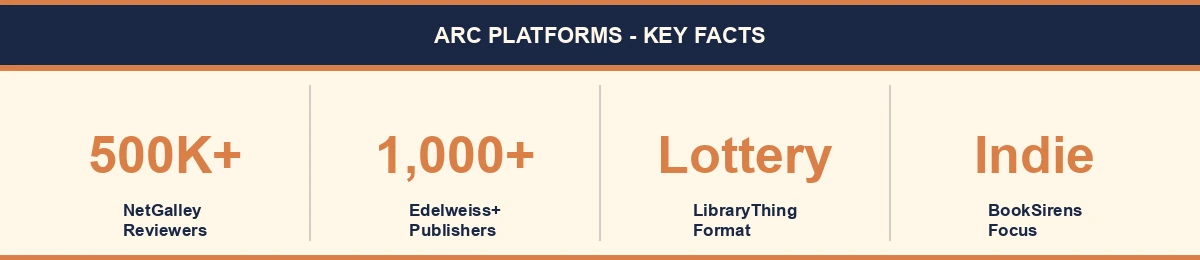
NetGalley alone has over 500,000 registered reviewers competing for the same advance copies you want. Knowing which ARC platforms exist is not enough — knowing how each one works, what publishers actually look for, and where a new reviewer can realistically get approved is what separates readers who wait for release day from readers who get early access.
What Is an Advance Reader Copy (ARC)?
An advance reader copy — also called a galley, uncorrected proof, or eARC when digital — is a pre-publication version of a book distributed by publishers to reviewers, librarians, booksellers, and book influencers ahead of the official publication date. The goal is simple: generate early reviews, create pre-release buzz, and help the book land well on its first day of sale.
ARCs are not finished products. They may contain typos, formatting issues, or placeholder art. That is intentional. Publishers send them weeks or months before the release date specifically to get authentic reader reactions while there is still time for marketing to respond.
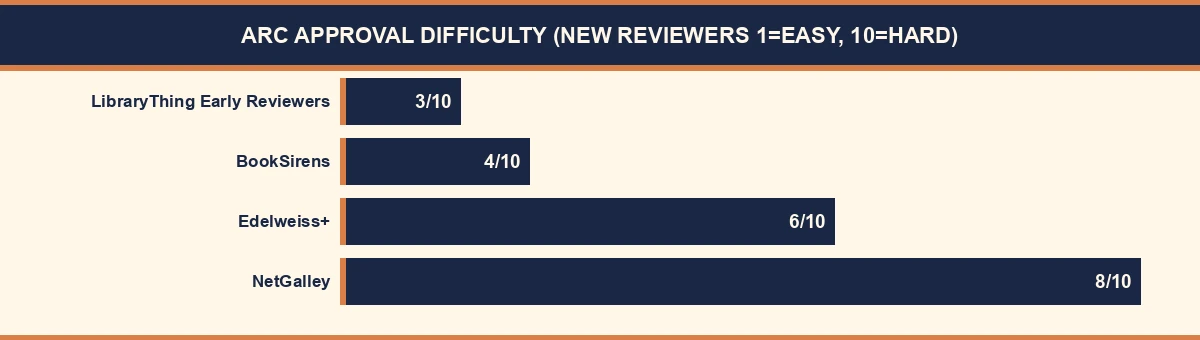
ARC approval rates: NetGalley’s overall approval rate for new reviewers is estimated at 20–35%. Edelweiss+ skews higher for established bloggers. LibraryThing Early Reviewers uses a lottery system — approval is random, not competitive. Starting with LibraryThing is the lowest-barrier entry point for first-time ARC reviewers.
Two formats exist in 2026:
- Physical ARCs — printed uncorrected proofs, often sent directly by publicists to established reviewers, journalists, and media contacts. These are increasingly rare outside of big-name authors and legacy publishers.
- Digital ARCs (eARCs) — the dominant format. Distributed via platforms like NetGalley and Edelweiss+ as DRM-protected files. Accessible to anyone who gets approved, regardless of location.
Who gets ARCs? The field is broader than it used to be. Traditional recipients — book bloggers, literary journalists, librarians, and booksellers — still get priority. But publishers have expanded their reviewer pools to include BookTok creators, bookstagram accounts, Goodreads reviewers, and podcast hosts. Even readers without an established platform can access ARCs through lottery programs like LibraryThing Early Reviewers or indie-focused platforms like Booksirens.
The review copy you get carries an implied obligation: post an honest review on or near the publication date. You are not required to be positive, but you are expected to follow through.
Once you land your first ARC, the single most important thing you can do is write a review that publishers actually want to share. See our guide on how to write an ARC review to make sure your feedback gets noticed and keeps approval doors open.
Top ARC Websites in 2026: Overview
An advance reader copy (ARC) is a pre-publication version of a book sent to reviewers before the official release date. Publishers use them to generate early buzz, collect reviews, and build word-of-mouth. The top platforms for getting ARCs in 2026 are NetGalley, Edelweiss+, LibraryThing Early Reviewers, Booksirens, and BookishFirst — each with different approval criteria, book catalogs, and reviewer requirements.
Here is a quick-reference comparison of the major platforms before we dig into each one:
| Platform | Type | Best For | Approval Difficulty | Cost | Format |
|---|---|---|---|---|---|
| NetGalley | Request-based | Book bloggers, reviewers | Medium–High | Free (publisher pays) | eARC (DRM) |
| Edelweiss+ | Request-based | Librarians, booksellers, industry | Medium–High | Free | eARC, catalog browsing |
| LibraryThing Early Reviewers | Lottery | Readers without platforms | Low (luck-based) | Free | Physical + digital |
| Booksirens | Request-based | Indie author reviewers | Low–Medium | Free | eARC (PDF/EPUB) |
| BookishFirst | Read & vote | Casual readers, new voices | Low | Free | Excerpts + select full eARCs |
| Publisher Direct Programs | Application/newsletter | Established reviewers, fans | Varies | Free | Physical + digital |
A note on BookishFirst: as of mid-2025 the platform was still operational but had shifted its model toward excerpt-based voting rather than full ARC distribution. If you want full manuscripts, treat it as a secondary option rather than a primary source.
1. NetGalley — Best Overall for Book Bloggers
NetGalley is the dominant ARC platform for English-language publishing. It sits between major publishers — Penguin Random House, HarperCollins, Simon & Schuster, Macmillan, Hachette, and thousands of smaller houses — and a community of over 400,000 registered reviewers. If you only set up one ARC account, make it this one.
How it works: Publishers list upcoming titles on NetGalley with a set review window, usually 30–90 days before the publication date. As a reviewer, you browse the catalog, click “Request,” and wait for the publisher to approve or decline. Some titles are set to “Read Now,” meaning instant access without approval. Others require the publisher to manually vet each request.
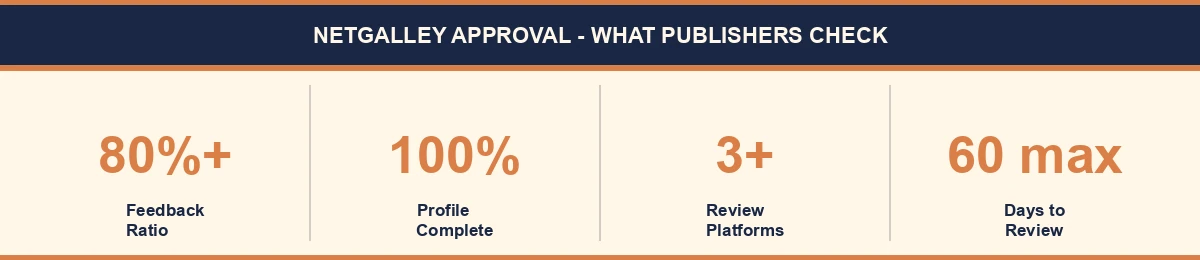
The feedback ratio: NetGalley shows publishers your “feedback ratio” — the percentage of titles you have requested where you actually posted a review. Publishers can see this number. Book blogging communities generally report that a ratio below 60–70% raises concerns with careful publishers, and that maintaining 80% or above significantly improves approval odds — though NetGalley publishes no official threshold. These are community benchmarks, not stated platform policy. This is the single most important metric on the platform, and new reviewers damage it badly by requesting books impulsively and never reviewing them.
Approval criteria vary by publisher. Some publishers approve anyone with a complete profile. Others want evidence of a review platform: a blog, a Goodreads account with a history of written reviews, a BookTok channel, or a bookstagram with engagement. A few major imprints only approve verified booksellers, librarians, or press.
Profile completeness matters more than follower count. Fill out every field: reviewer bio, genres you cover, links to your review platforms, your audience size (be honest — publishers check). A sparse profile is an automatic decline from careful publishers.
Popular genres on NetGalley: Romance and literary fiction are heavily represented. Thriller, fantasy, YA, and nonfiction (self-help, memoir, business) are well-stocked. If you read Colleen Hoover books, for example, Harlequin, Avon, and other romance imprints are active on the platform and regularly approve well-rated reviewers.
NetGalley profile tip: Publishers can see your “Feedback Ratio” — the percentage of requested titles you have reviewed. Keep this above 80% before requesting new titles. A ratio below 60% is the single biggest reason publishers decline new requests from established accounts.
Pros:
- Largest catalog of any ARC platform
- Includes Big Five publishers
- Dashboard tracks your ratio and archived titles
- Wish function lets publishers find you for titles you did not request
Cons:
- Competitive for popular titles — approvals can be hard to get early on
- Feedback ratio pressure discourages new reviewers from browsing freely
- DRM-protected files only work in approved reading apps (Adobe Digital Editions, Kindle via send-to-device, Libby in some cases)
Best for: Bloggers and reviewers who post consistently, Goodreads reviewers with review histories, anyone targeting traditionally published titles.
2. Edelweiss+ — Best for Industry Professionals and Serious Reviewers
Edelweiss+ (edelweiss.abovethetreeline.com) started as a trade catalog tool for booksellers and librarians, and that DNA still shapes how it operates. It is less of a public reviewer platform and more of an industry resource that is accessible to serious reviewers willing to learn a less intuitive interface.
How it works: Publishers upload digital galleys and full catalogs. Reviewers can browse by imprint, pub date, subject, and format. The request and approval workflow mirrors NetGalley, but the platform also lets you mark titles as “owned” or “interested” for catalog-browsing purposes — useful for librarians making collection decisions.
The reviewer base is smaller and more professional. You are less likely to be lost in a pile of 2,000 requests on Edelweiss. Some publishers find it easier to give approvals here precisely because the pool is self-selecting: casual readers do not typically navigate the platform.
Who uses it: Booksellers doing advance orders, librarians selecting titles for collection development, literary journalists, and book bloggers who have found that competitive NetGalley titles are more accessible here.
Key difference from NetGalley: Edelweiss does not enforce a public feedback ratio in the same visible way. That said, publishers track whether their galleys result in reviews. Reviewers who consistently ghost their ARCs get noted internally.
The interface is clunky by modern standards. The search and filtering tools have improved, but first-time users often find it disorienting compared to NetGalley’s cleaner layout. Stick with it — the catalog depth is worth the learning curve.
Pros:
- Large catalog, including publishers not on NetGalley
- Less saturated reviewer pool means better approval odds for some titles
- Excellent for librarians and booksellers with professional credentialing
- No DRM on some titles — publishers can set files as DRM-free
Cons:
- Harder to navigate than NetGalley
- Less social infrastructure (no wish function, less community feel)
- Some publishers prioritize NetGalley and treat Edelweiss as secondary
Best for: Librarians, booksellers, serious book bloggers who want an alternative channel for Big Five titles, and reviewers who have been declined on NetGalley for popular titles.
3. BookishFirst — Best for Casual Readers and Discovery
BookishFirst operates differently from the platforms above. Rather than requesting a full ARC upfront, you read a first chapter excerpt, respond to it, and vote. Publishers use the vote data to gauge interest, and a subset of voters receive the full eARC or an entry into a physical book giveaway.
As of mid-2025, BookishFirst had narrowed its catalog and shifted emphasis toward its excerpt-and-vote model rather than broad eARC distribution. Full manuscript access is more limited than it once was. Treat it as a discovery and sampling tool — useful for finding new authors you might then pursue on NetGalley — rather than your main ARC source.
How it works: Excerpts post weekly. You read the excerpt, rate it (thumbs up/neutral/pass), and comment. The most engaged voters are selected for full copies. There is no approval ratio to maintain, no profile scrutiny, no minimum follower count.
Pros:
- Zero barrier to entry — no established platform required
- Good for readers who want to sample before committing to a full review
- Occasional physical book prizes
Cons:
- Full eARC access is limited and lottery-style
- Catalog is smaller than NetGalley or Edelweiss
- Not useful if you need reliable, consistent ARC access
Best for: New reviewers building a reading habit, readers who want to discover books before requesting them elsewhere, and anyone not ready to commit to a full ARC review schedule.
4. LibraryThing Early Reviewers — Best Free Option Without a Platform
LibraryThing Early Reviewers (librarything.com/er) is the least stressful ARC program on this list. Every month, publishers donate copies of upcoming titles — a mix of physical books and digital ARCs — and LibraryThing runs a lottery. Members who match the book’s genre profile and have a history of reviewing on the site are entered automatically.
There is no application. No approval waiting game. No feedback ratio score displayed to publishers. You enter by being an active LibraryThing member with your reading preferences set accurately and a track record of posting reviews on the site.
The matching algorithm considers your genre history, location (for physical books, since shipping is a factor), and how recently you have reviewed on the platform. Members who review consistently win more often.
Physical books are still common here, which is unusual in 2026. For readers who want a printed galley on their shelf, LibraryThing is one of the few platforms still distributing them regularly.
The catalog skews toward smaller presses, university presses, independent publishers, and mid-list titles. You will not find a hotly anticipated thriller from a Big Five imprint here. You will find interesting debut novels, niche nonfiction, and authors hungry for early readers.
Pros:
- No follower minimum, no blog required, no approval anxiety
- Free to join (LibraryThing has a free tier sufficient for Early Reviewers)
- Physical book copies still available
- Good for niche genres and indie publishers
Cons:
- Lottery model means no guaranteed access
- Catalog is smaller and skews away from mainstream commercial fiction
- You must be an active LibraryThing user to be matched frequently
Best for: Readers without blogs or social media platforms, those who prefer physical galleys, and reviewers interested in indie or university press titles.
5. Booksirens — Best for Indie Author ARCs
Booksirens (booksirens.com) carved out a specific niche: indie and self-published authors who need ARC readers. If you read self-published romance, fantasy, mystery, or genre fiction — and a lot of serious readers do — this is the platform with the most relevant catalog.
How it works: Authors post their upcoming titles with a review window and genre tags. Reviewers browse, request, and receive DRM-free PDFs or EPUBs directly. The approval process is lighter than NetGalley because individual authors — not imprints with publicists — are reviewing requests. Most requests turn around within a few days.
Approval is generally easier here than on the big platforms. Authors on Booksirens are often debut self-publishers who want any legitimate reviewer. A Goodreads profile with a few reviews is typically enough to get approved.
DRM-free files are standard on Booksirens, which means you can read on any device or app without fighting with Adobe Digital Editions.
The catalog is almost entirely indie. You will not find Penguin Random House here. You will find a romance author releasing book three in a series, a fantasy writer publishing their debut, or a thriller author looking to build ARC team momentum before launch.
Pros:
- Higher approval rates than NetGalley for new reviewers
- DRM-free files (PDF/EPUB) work anywhere
- Good for indie and self-published genre fiction
- Faster approval turnaround
Cons:
- No traditionally published titles
- Quality varies significantly across indie titles
- Smaller catalog than NetGalley or Edelweiss
Best for: Genre fiction readers (especially romance and fantasy), new reviewers who want to build their feedback ratio before tackling NetGalley, and readers who prefer indie authors over Big Five publishing.
6. Publisher Direct Programs and ARC Lists
The platforms above catch most ARC opportunities, but some of the best review copies never touch NetGalley or Edelweiss. Publishers run their own direct programs, and knowing where to look makes a real difference for established reviewers.
Tor.com (Tor Books): Tor.com runs one of the most active direct ARC programs in genre fiction. Their newsletter subscribers get early access to fantasy and science fiction galleys. The tor.com blog also publishes free short fiction and excerpts that function as de facto ARC previews. Sign up at tor.com and watch for their reviewer application cycles.
Harlequin: Harlequin operates an ARC team specifically for romance readers. Applications open periodically. They prioritize reviewers with active Goodreads profiles and consistent posting histories, but they are generally accessible compared to literary fiction publishers.
Penguin Random House: PRH does not run a single centralized ARC program — instead, each imprint manages its own outreach. Following imprint publicists on social media (especially X/Twitter and Instagram) and reaching out directly is the most reliable approach. Imprints like Berkley, Dutton, and Crown are responsive to pitches from reviewers with mid-sized platforms.
Simon & Schuster: Similar to PRH, S&S works imprint-by-imprint. Gallery Books (romance and commercial fiction) and Atria are the most accessible to book bloggers and BookTok creators.
BookTok ARC opportunities: In 2025–2026, publishers increasingly reach out to creators directly through TikTok DMs, Instagram, and email when a book matches a creator’s evident niche. A consistent BookTok or bookstagram account — even with 1,000–5,000 engaged followers — qualifies you for pitches from mid-sized publishers. Engagement rate matters more than raw follower count.
ARC lists and newsletters: Several communities aggregate direct ARC opportunities. The r/bookbloggers subreddit maintains rolling threads of open ARC applications. Several Substack newsletters focused on book publishing round up open ARC calls weekly.
Want to see what the book community is buzzing about right now? Browse our most anticipated ARCs of 2026 list to see which titles are generating the most pre-publication excitement — and which platforms are distributing them.
How to Get Approved for ARCs as a New Reviewer
Getting your first ARC approval is the hardest part. Publishers are risk-averse: they want to give galleys to reviewers who will actually post. Here is how to build the profile that gets you through the door.
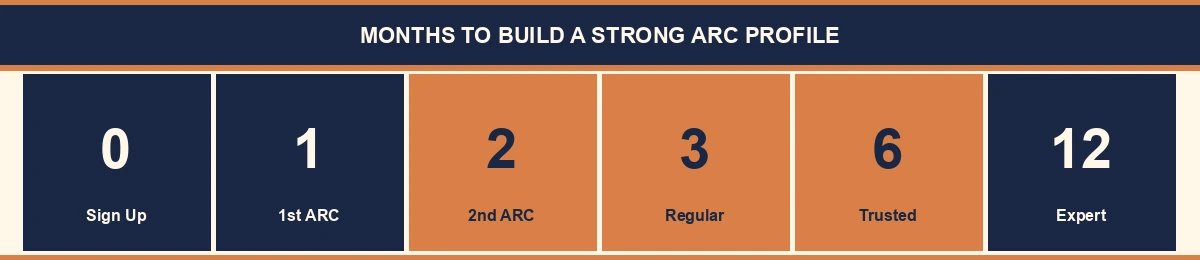
Step 1: Build a review presence before requesting anything. Post 10–20 honest, written reviews on Goodreads or a blog before you create a NetGalley account. Publishers check. A reviewer with 50 reviews on Goodreads — all written in full sentences, not just star ratings — has a demonstrably better approval rate than a blank profile.
Step 2: Fill out your NetGalley and Edelweiss profiles completely. List every platform where you post reviews, your typical posting schedule, your genre focus, and an honest estimate of your audience size. “Small but engaged” is acceptable. Empty fields signal an unmotivated reviewer.
Step 3: Be selective with your first requests. Do not request the most anticipated thriller of the season on your first week. Instead, filter for less competitive titles — mid-list debuts, quieter literary fiction, nonfiction in a niche you genuinely read. Your goal early on is to build your feedback ratio, not to get the hottest books.
Avoid this mistake: Do not request every book you see. Publishers track request-to-review ratios site-wide and can mark accounts as low-priority. Request only books you will genuinely read and review within the publisher’s window (typically 30–90 days after publication).
Step 4: Review everything you request. A 70% feedback ratio will close doors with careful publishers. An 85–90% ratio opens them. If you request a book and realize you cannot finish it, post a DNF note explaining why. Publishers count DNF reviews positively.
Step 5: Start with easier approval platforms while building your profile. Booksirens and LibraryThing Early Reviewers are the right starting points. Booksirens approves new reviewers who are still building their track record. LibraryThing’s lottery requires no approval at all. Once you have 10–15 posted reviews from those platforms, bring those links to your NetGalley profile.
Step 6: Request Read Now titles on NetGalley. The “Read Now” shelf requires no publisher approval — access is instant. Reviewing those titles builds your ratio and review history simultaneously. It is the fastest legitimate way to establish yourself on the platform.
For a step-by-step walkthrough of what to do once you have the book in hand, see our guide on how to write an ARC review.
Frequently Asked Questions About ARC Sites
Q: What is the best website to get Advance Reader Copies?
A: NetGalley is the best overall platform for most book reviewers. It has the largest catalog, includes all major publishers, and accepts reviewers at multiple levels of experience. New reviewers should also join Booksirens for easier early approvals and LibraryThing Early Reviewers for a low-pressure entry point. Using all three simultaneously gives you the broadest access to review copies.
Q: Can you get ARCs without a blog?
A: Yes. A blog is not required on any of the major ARC platforms. NetGalley accepts Goodreads reviewers, BookTok creators, bookstagrammers, and podcast hosts. LibraryThing Early Reviewers and Booksirens have no platform requirement at all — a Goodreads account with a review history is sufficient for most approvals. The assumption that you need a blog to get ARCs has been outdated since at least 2022.
Q: What is NetGalley and how does it work?
A: NetGalley is a platform where publishers list upcoming books and reviewers request access before the publication date. Publishers approve or decline each request. Approved reviewers read the digital ARC (usually a DRM-protected file) and post a review on or before the publication date on sites like Goodreads, Amazon, or their own blog. NetGalley tracks the percentage of requested books you have reviewed — called your feedback ratio — and publishers use it to evaluate future requests.
Q: Is NetGalley free to use?
A: Free for reviewers. Publishers pay to list their titles. Reviewers create an account at netgalley.com at no cost and can browse, request, and read approved titles without paying anything. There is no premium tier for reviewers.
Q: What is the difference between NetGalley and Edelweiss+?
A: Both distribute digital ARCs, but they serve slightly different audiences. NetGalley is more reviewer- and blogger-facing, with a social dimension (wish function, community reviews) and a cleaner interface. Edelweiss+ started as a trade catalog tool for booksellers and librarians, making it more professional in orientation and somewhat harder to navigate. Edelweiss often has a less saturated reviewer pool, which can mean better approval odds for titles that are oversubscribed on NetGalley. Serious reviewers use both.
Q: How long does it take to get ARC approvals?
A: It varies by publisher and platform. On NetGalley, approvals can come within hours for automated approvals or Read Now titles. Manual approvals from publishers typically take 1–7 business days. Some publishers batch their approvals weekly or bi-weekly. Booksirens tends to be faster — many authors respond within 24–48 hours. LibraryThing Early Reviewers announces its monthly matches on the first of each month. If you have not heard back on a NetGalley request within two weeks and the title is still listed, the publisher likely declined without notification — that is normal practice.
The best move you can make today is to create accounts on NetGalley and Booksirens, spend 30 minutes writing honest mini-reviews of books you have already read on Goodreads, then come back and fill out your reviewer profiles completely. That single afternoon of setup work is what separates reviewers who get approved from reviewers who do not.
ARC Reviews Worth Reading
Once you have your first ARC in hand, your review is how you stay in the program. A thoughtful, specific review — the kind that tells a publisher exactly what worked and what did not — is what gets you invited back. For examples of the kind of ARC reviews that build reviewer credibility, see our example of an ARC review for Demon Copperhead and this Fool Me Once review to see how detailed, reader-focused writeups are structured. Even a shorter romance ARC like Ugly Love by Colleen Hoover benefits from a specific, plot-engaged review rather than a generic recommendation.
The platforms are open. The books are waiting. Start reviewing.
Understanding reading levels helps you match the right books to the right readers. Whether you’re decoding a Lexile score on a publisher’s catalogue, navigating a Scholastic book order, or making sense of a DRA report from a teacher, these guides explain each system in plain language.
- The Lexile Framework: A Complete Guide — what Lexile scores mean and how publishers use them
- Scholastic Reading Levels Explained — the letter-based system used on Scholastic book orders
- DRA Reading Levels Guide — the classroom assessment scale teachers use for early readers
Please Write Your Comments