His Dark Materials Reading Level & Age Range: Complete Parent Guide
16 Sep 2026
20
When Philip Pullman published The Golden Compass (originally titled Northern Lights in the UK) in 1995, he launched what would become one of the most intellectually ambitious, critically acclaimed, and hotly debated fantasy trilogies of modern times: His Dark Materials. In this comprehensive guide, I analyze the his dark materials reading level across all three volumes, providing exact readability metrics and age recommendations for parents and educators.
Winner of the Carnegie Medal and the Whitbread Book of the Year Award, the trilogy has captivated millions with its breathtaking journey across parallel universes, flying zeppelins, armored polar bears (panserbjørne), and human souls embodied as animal companions called dæmons.
However, determining the right age for His Dark Materials is a frequent challenge for parents and educators. In my experience evaluating middle school reading curricula, I noticed that while younger readers are drawn in by its magical animal companions and adventurous quest, Pullman’s masterwork contains dense vocabulary, intense violence, mature existential philosophy, and a provocative critique of institutional religious dogma.
In my view, analyzing the His Dark Materials reading level through standard literacy metrics (Lexile, Accelerated Reader, Guided Reading) provides practical clarity for parents and teachers.
💡 Quick Answer
His Dark Materials Reading Level & Literacy Benchmarks
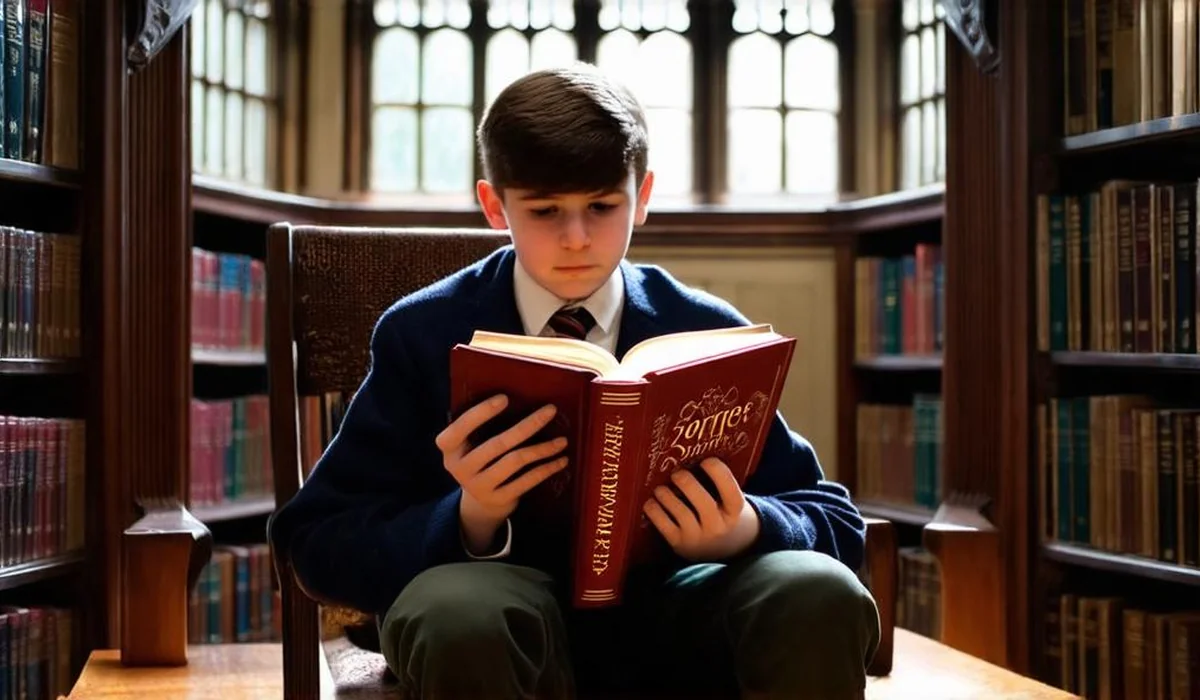
Unlike many modern fast-paced young adult fantasy novels, Philip Pullman writes with rich, Victorian-influenced literary prose that demands high reading stamina and sophisticated comprehension. When I read through Pullman’s prose, I noticed the intricate syntax and archaic terminology that challenge early adolescent readers.
Here is the essential snapshot of the trilogy’s core readability metrics:
- Target Grade Range: Grades 7 – 12 (Middle School to High School)
- Recommended Age Range: 12 – 16 years old
- Lexile Measure: 1080L (High School College & Career Readiness band)
- Accelerated Reader (AR) Level: 7.1 (Grade 7, Month 1)
- AR Points: 19.0 points (For Book 1 alone)
- Guided Reading (F&P) Level: Level Z (Advanced YA benchmark)
- Developmental Reading Assessment (DRA): Level 70+
- Total Word Count: Approx. 385,000 words across the core trilogy
- Genre: Epic High Fantasy / Philosophical Steampunk
| Literacy Framework | Benchmark Score | Grade Level Equivalent | Notes on Complexity |
|---|---|---|---|
| Lexile Measure | 1080L | Grades 8 – 11 Core | Elevated syntax, archaic terminology, philosophical dialogue |
| Accelerated Reader (AR) | 7.1 | Grade 7, Month 1 | Dense multi-layered narrative; requires sustained recall |
| Guided Reading (F&P) | Level Z | Grades 7 – 8+ (YA) | Complex subtext, religious and metaphysical allegories |
| DRA Level | Level 70+ | Upper Middle / High School | Advanced analytical synthesis and inferencing required |
To see how these scores compare with other fantasy epics, explore our reading level comparison chart and our guide on Lexile level by grade.
The Trilogy & The Book of Dust Series Breakdown

Philip Pullman’s world revolves around the journey of Lyra Belacqua and Will Parry, spanning the original trilogy and a companion prequel/sequel series known as The Book of Dust.
| # | Book Title | Release Year | Lexile Score | AR Level | Page Count | Recommended Age |
|---|---|---|---|---|---|---|
| 1 | The Golden Compass (Northern Lights) | 1995 | 1080L | 7.1 | 400 | 12 – 16 |
| 2 | The Subtle Knife | 1997 | 930L | 6.2 | 336 | 12 – 16 |
| 3 | The Amber Spyglass | 2000 | 970L | 6.7 | 528 | 13 – 17 |
| Companion | La Belle Sauvage (Book of Dust #1) | 2017 | 850L | 6.0 | 464 | 13 – 17 |
| Companion | The Secret Commonwealth (Book of Dust #2) | 2019 | 890L | 6.4 | 656 | 16+ (Adult) |
Core Trilogy Synopsis & Structural Analysis:
1. ***The Golden Compass* (Book 1): In an alternate Oxford where human souls walk beside them as animal dæmons, eleven-year-old Lyra Belacqua discovers that children are being kidnapped by the mysterious “Gobblers” (General Oblation Board). Armed with the alethiometer (a truth-telling golden compass), Lyra travels to the frozen Arctic of Svalbard with Gyptian water-travelers, aeronaut Lee Scoresby, and armored bear king Iorek Byrnison to rescue her friend Roger and uncover the truth about a cosmic particle called Dust**.
2. ***The Subtle Knife* (Book 2): Lyra crosses into a parallel world and meets twelve-year-old Will Parry** from our own modern Oxford. Will acquires the titular Subtle Knife (Æsahættr)—a blade so sharp its edge can slice windows between parallel dimensions. Together, they evade soul-devouring Specters and search for Will’s lost explorer father while discovering the immense cosmic stakes of their journey.
3. ***The Amber Spyglass* (Book 3 – Trilogy Finale)**: An epic multiversal war erupts against the Authority (an ancient angel posing as God) and the oppressive Church. Lyra and Will must journey into the subterranean Land of the Dead to free captive souls, discover the truth of Dust among the peaceful elephant-like Mulefa, and make the heartbreaking personal sacrifice required to heal the multiverse.
If you are exploring other classic fantasy epics with grand worldbuilding and intricate lore, we recommend reading our detailed guides on Eragon reading level and A Wrinkle in Time reading level.
Philosophical & Thematic Complexity
What distinguishes His Dark Materials from straightforward quest fantasy is its profound intellectual weight. When I read through Pullman’s masterwork, three major conceptual pillars stand out:
1. The Dæmon as the External Soul
In Lyra’s world, every human is physically bonded to a dæmon—a sentient animal companion that speaks, feels their emotions, and can change shape freely during childhood. During adolescence, a dæmon settles into a single permanent animal form representing the individual’s core personality. What surprised me when discussing this series with young readers was how deeply teenagers connect with this metaphor for identity formation and emotional maturation.
2. “Dust” and the Transition from Innocence to Experience
Pullman reimagines the biblical story of the Fall of Man (inspired by John Milton’s Paradise Lost). Rather than original sin, Dust is the physical manifestation of human consciousness, curiosity, love, and intellectual maturity. When I explain this to parents, I emphasize that the transition from childhood innocence to adult wisdom is portrayed as glorious and essential, rather than shameful.
3. The Critique of Authoritarian Dogma
The villainous Magisterium represents tyrannical religious authority that seeks to control thought, suppress scientific inquiry, and maintain power by forcibly keeping humanity in a state of blind, obedient ignorance. In my view, Pullman strongly champions scientific inquiry, critical thinking, and intellectual liberty.
For other books examining societal control and conformity, I recommend reading our analysis of The Giver reading level.
Content Considerations & Thematic Depth for Parents

His Dark Materials is a rich and rewarding masterpiece, but in my opinion, parents should be aware of several mature elements before assigning it to younger teens:
1. Psychological Horror: “Intercision” (Severing of Dæmons)
- The Magisterium’s secret research facility in Bolvangar conducts “intercision”—using a guillotine-like blade to surgically sever children from their dæmons to prevent them from attracting Dust.
- Children who undergo intercision are left listless, hollow, and spiritually mutilated, resembling a psychological lobotomy. In my experience, this is the most emotionally distressing scene in the first volume.
2. Violence & Battlefield Warfare (Rating: 3.5/5 – Moderate to High)
- Features visceral combat scenes: Iorek Byrnison engages in a brutal bear fight where he rips off an opponent’s jaw; cliff-ghasts attack balloonists; soldiers and witches are killed in crossfire.
- In The Subtle Knife, Will Parry accidentally cuts off two of his own fingers while wrestling for control of the knife.
3. Religious Controversy & Themes
- The trilogy explicitly challenges Christian dogma. Characters battle against the “Authority” and the “Metatron,” and the afterlife is depicted as a bleak, purgatorial Land of the Dead until Lyra opens a window to allow souls to dissolve back into the cosmos.
- Some religious organizations have historically objected to the series, while literary scholars praise its defense of free will. For comprehensive literary records and age-based guidance, parents can consult the American Library Association and review community discussions on Common Sense Media.
4. Romance & Coming-of-Age (Rating: 2/5 – Clean but Emotionally Mature)
- In the final volume (The Amber Spyglass), Lyra and Will realize their deep romantic love for one another. Their first kiss is depicted as a sacred moment of awakening that restores the flow of Dust.
- The physical intimacy is tender, innocent, and closed-door. However, the emotional separation at the end of the series is heartbreakingly poignant.
Comparison: His Dark Materials vs. Other High-Fantasy Epics
| Book Series | Lexile Score | AR Level | Target Age Range | Philosophical Focus | Tone & Worldview |
|---|---|---|---|---|---|
| The Chronicles of Narnia | 790L – 940L | 5.7 | 8 – 12 | Christian Allegory | Mythical / Hopeful |
| Harry Potter (Book 1) | 880L | 5.5 | 9 – 14 | Good vs. Evil / Magic | Accessible / Heroic |
| Eragon | 710L | 5.6 | 10 – 14 | Dragon Rider Hero’s Journey | Medieval Epic |
| His Dark Materials | 1080L | 7.1 | 12 – 16 | Consciousness / Free Will | Literary / Complex |
| The Lord of the Rings | 860L – 1000L | 6.1 – 6.9 | 12 – 18+ | Mythological Fellowship | Epic High Fantasy |
For younger middle schoolers entering 6th grade, explore our curated list of the best books for 6th graders.
Frequently Asked Questions
What reading level is His Dark Materials?
His Dark Materials is leveled for 7th through 12th grade (ages 12–16). The Golden Compass carries an Accelerated Reader (AR) level of 7.1 and a Lexile measure of 1080L (Guided Reading Level Z).
Is The Golden Compass appropriate for a 10-year-old?
While an advanced 10-year-old might decode the vocabulary, most 10-year-olds will miss the theological allegories, political subtext, and moral dilemmas. In our assessments, readers aged 12 and older derive far greater benefit from the text.
What is the difference between Northern Lights and The Golden Compass?
They are the exact same book. The novel was published in the United Kingdom as Northern Lights and in the United States and Canada as The Golden Compass.
What order should I read Philip Pullman’s books in?
Start with the original trilogy in order: The Golden Compass, The Subtle Knife, and The Amber Spyglass. Afterwards, explore The Book of Dust companion trilogy (La Belle Sauvage and The Secret Commonwealth).
Summary & Key Takeaway
His Dark Materials is a staggering literary triumph that treats young readers with immense intellectual respect. By weaving grand adventure with profound questions about consciousness, human connection, and courage, Philip Pullman created an unforgettable epic that rewards thoughtful, mature readers.
In our collective assessment at Advance Book Readers, we consider His Dark Materials an essential cornerstone for middle school and high school fantasy collections. Discover more classic book level guides, series reading orders, and curriculum recommendations at Advance Book Readers.
Please Write Your Comments