Annihilation Book Summary, Ending Explained & Review
06 Jul 2026
1120
Jeff VanderMeer’s Annihilation is the kind of book that finishes and leaves you staring at the wall. The annihilation book summary you’ll find most places covers the plot beats. This one covers those — but also the ending, what Area X actually is (as far as VanderMeer lets us know), and whether the book is right for you. I’ve read all three Southern Reach novels; what I found in this first volume still unsettles me more than the sequels do.
What Is Annihilation About?

Annihilation follows a biologist who joins the twelfth expedition into Area X — a quarantined coastal wilderness where nature has reclaimed everything and previous teams have returned changed, died, or disappeared entirely. Told through her journal, the novel tracks what she discovers inside a structure the team calls the Tower, and what happens when she begins transforming herself.
Area X appeared without warning along a stretch of the Southern US coast. The government agency called the Southern Reach has been sending in expeditions for years. They always end badly. The biologist — she is never named, nor are any of her teammates — enters with a psychologist, a surveyor, and an anthropologist. They have been hypnotically conditioned for calm. They have been told almost nothing useful.
The premise sounds like a thriller, but VanderMeer writes literary weird fiction. In my experience, the novel is more accurately described as ecological horror than science fiction, though it won both a Nebula Award and a Shirley Jackson Award. Think Kafka crossed with a nature documentary narrated by someone who isn’t entirely sure she’s still human.
The unreliable narrator is the engine. The biologist notices things other people miss, withholds things from us that she notices, and is less interested in survival than in understanding. That disconnect — between what the reader wants (answers) and what the narrator wants (observation) — is intentional. Per Goodreads reader data, it splits readers almost cleanly into those who rate it five stars and those who rate it two. What surprised me most is how VanderMeer uses that polarization as a feature, not a flaw — the novel is explicitly not for everyone, and it knows it.
The Four Unnamed Expeditioners
VanderMeer strips the women of names and professional identities beyond their job titles. The biologist is our narrator. The psychologist leads the group and, we learn gradually, has more authority than she lets on. The surveyor is pragmatic and suspicious. The anthropologist disappears early.
This de-naming is not an oversight. It is the novel asking you to think about what we lose when institutions reduce people to functions.
Annihilation Plot Summary (Spoiler-Free)
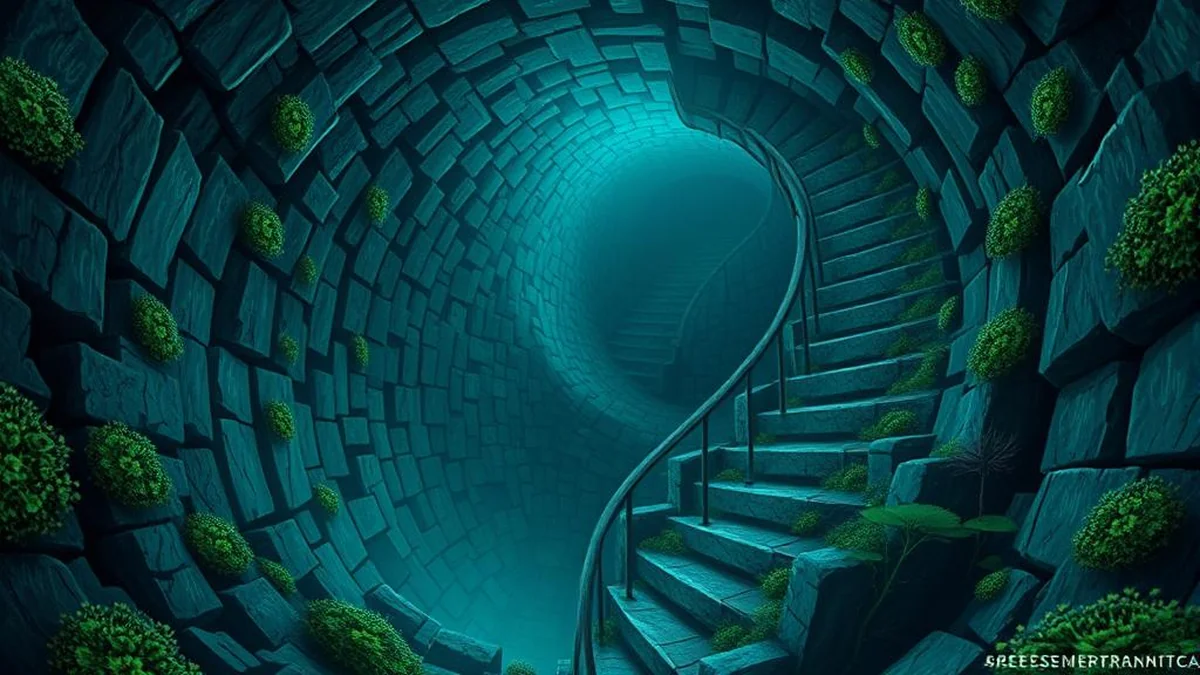
The team enters Area X on foot through a door in a ruined wall at the border. Almost immediately, things don’t match what the Southern Reach told them to expect. A structure that was described to them as a tunnel is clearly a tower — it descends underground rather than rising above it. The walls are covered in living writing, words that pulse with a faint bioluminescent glow. The anthropologist vanishes.
The biologist breathes in spores from the writing and begins to change in ways she doesn’t fully recognize. Her senses sharpen. Her emotional detachment — already considerable — deepens. She begins to notice things no one else does.
The team explores the lighthouse, which served as the base for previous expeditions. Inside they find a massive pile of journals from prior teams — evidence of how many expeditions there have actually been, far more than the Southern Reach ever told them. The journals stop mid-sentence in ways that suggest the writers didn’t choose to stop.
The surveyor and the psychologist’s relationship deteriorates. Trust fractures. The biologist moves further into Area X rather than pulling back toward the border, because by this point she understands that she has already been changed by it, and she wants to understand what she’s changing into. I read the second half of this novel in one unbroken stretch; the prose locks you in before you notice it happening.
The plot doesn’t resolve in the conventional sense. Mysteries compound rather than clear. If you are looking for an Annihilation book summary that ends with “and then everything is explained,” this is not the book for you. The Southern Reach trilogy spreads answers across three volumes — and deliberately withholds some even then.
VanderMeer’s pacing here is worth noting. This is not a novel that rushes. For something that moves faster but has the same kind of bleak intelligence, The Time Machine shares the quality of a narrator walking willingly toward something they understand will change them.
The Ending of Annihilation, Explained

The ending is the part most readers need unpacked. Here is what happens and what it means — with full spoilers from this point.
What Happens to the Biologist
The biologist descends into the Tower a final time and encounters the Crawler — the entity that writes the words on the walls. It does not attack her. It moves through her. She is not sure, afterward, whether she survived the encounter or whether something else is now operating her body.
She finds the psychologist’s journal, which reveals that the psychologist was sent into Area X with a specific task: to return carrying a contaminated sample. The Southern Reach, in other words, was deliberately trying to import whatever Area X produces. Whether that was sanctioned or the psychologist’s own agenda is left open.
The biologist exits the Tower and moves toward the coast rather than the border. She intends to cross the bay and reach a series of islands she has seen referenced in the journals. She believes her husband — who was on a prior expedition and returned as a hollow version of himself — may have gone there.
What Is Area X? What Is the Crawler?
VanderMeer never gives a clean answer, and the sequels (Authority and Acceptance) expand rather than resolve the mystery. What I noticed, reading across all three books, is that Area X is better understood as an immune response — nature (or something beyond nature) asserting a cleansing autonomy over a section of land that humans have long contaminated — than as an alien invasion in the traditional sense.
The Crawler may be the agent of that process, or it may be a symptom of it. The writing on the walls is taken from a religious text that one of the early expeditions brought in — Area X appears to incorporate and transform whatever it encounters, including human language and human bodies.
Is There a Resolution?
No — not in this volume. The biologist’s fate is genuinely open. She may be transforming into something adapted to Area X, as her husband appeared to. She may simply be walking toward her death. VanderMeer has said in interviews that he wrote the novel as a complete experience rather than as the first act of a trilogy, and that the lack of resolution is the point. Per The Guardian‘s coverage of the Southern Reach series, the horror here is the horror of not knowing — which is, ultimately, the most honest kind.
If you want resolution, read Authority and Acceptance. They provide context. They do not, however, hand it to you.
Themes and What Makes This Book Unusual
Nature as antagonist — and protagonist. Area X is not simply a threat. It is described with the same detail and apparent affection as the biologist describes wildlife she has studied. VanderMeer is an environmental writer as much as a genre writer, and the ambiguity about whether Area X is destructive or restorative is intentional.
Unreliable narration as structure. The biologist is not lying to us. She is withholding, misremembering, and interpreting incorrectly in ways she doesn’t flag. This is not the performative unreliability of a thriller twist. It is closer to what Kazuo Ishiguro does in The Remains of the Day — the gap between what the narrator tells you and what is actually happening is the real story. I found The Sympathizer useful to read alongside it for this reason: another first-person narrator who believes they are being honest and demonstrably is not.
Institutional distrust. The Southern Reach is as much a source of danger as Area X. The expeditioners have been lied to, conditioned, and in some cases deliberately sacrificed. The novel is interested in what institutions do to the people they claim to protect.
The writing style is precise, slow, and strange. VanderMeer takes his time. If you read primarily for plot velocity, the first 50 pages will feel like a test. For readers who enjoy A Little Life or Demon Copperhead — books where atmosphere and interiority carry as much weight as event — Annihilation will feel immediately recognizable.
Who Should Read Annihilation
Read it if you like literary fiction that uses genre conventions rather than following them, you are comfortable with genuine ambiguity at the end of a novel, you are interested in ecological or environmental horror, or you want something that will still be in your head a week later.
Skip it (for now) if you need narrative momentum throughout, you dislike unnamed characters, or you want a thriller with answers. Come back to it after reading the sequels, which you might find easier to enter through Authority.
Annihilation is not long — 195 pages — and I recommend reading it in a single sitting if you can manage it. The density of the prose rewards concentrated attention in a way that gets diluted across several reading sessions. For more literary fiction with this kind of weight, see our When Breath Becomes Air summary for something that similarly treats mortality as a subject worth slowing down for, or Wuthering Heights if gothic atmosphere is the draw.
FAQs
What is the Annihilation book about in simple terms?
A biologist enters a quarantined wilderness zone called Area X and documents what happens to her and her team. The zone behaves in ways that can’t be explained, previous expeditions have all ended badly, and she gradually realizes she has been changed by simply being there. It’s literary horror told through an unreliable narrator’s journal.
What happens at the end of Annihilation?
The biologist descends into the Tower, survives an encounter with the Crawler (the entity that writes on the walls), discovers the psychologist’s hidden mission, and then walks toward the coast rather than the exit — intent on finding the islands where she believes her transformed husband may have gone. Her ultimate fate is left open.
What is Area X in Annihilation?
VanderMeer never gives a definitive answer. Area X appears to be a zone where nature has reasserted itself in a transformed, partly autonomous way. It incorporates whatever enters it — living things, language, human personalities — and changes them. It is not clearly alien in origin, though the sequels explore its history in more detail.
What is the Crawler in Annihilation?
The Crawler is the entity that moves through the underground Tower and writes the glowing words on its walls. The biologist encounters it directly toward the end of the novel. It appears to be the primary agent of transformation in Area X, though whether it has intent or awareness is never resolved.
Does Annihilation have a sequel?
Yes. Annihilation is the first book in the Southern Reach Trilogy. It is followed by Authority (told from the perspective of a Southern Reach official) and Acceptance (which cuts between multiple timelines and perspectives). The sequels provide more context but not complete resolution.
Is the Annihilation movie the same as the book?
Alex Garland’s 2018 film draws from the novel’s imagery and structure but takes significant liberties. The film’s biologist has a backstory that differs substantially from the book’s narrator, and the film provides a cleaner, more explicit conclusion. Garland has said he worked from memory rather than rereading the novel while writing the screenplay.
Is Annihilation appropriate for teens?
There is no explicit sexual content. There is psychological horror, body horror, and violence — all handled obliquely rather than graphically. Most high school readers who enjoy literary fiction or horror will be fine with it, and it is commonly assigned in AP English and college-level courses.
How long does it take to read Annihilation?
The novel is 195 pages. At an average adult reading pace of 250 words per minute, most readers finish in 3–4 hours. It reads faster than many literary novels of comparable length because the prose, while precise, is also tense and forward-moving.
Please Write Your Comments